• Skip to primary navigation
  • Skip to main content
  • Skip to primary sidebar

Soldier's Wife, Crazy Life

  • Home
    • My Disclosure Policy
    • My Privacy Policy
    • Contact Me
  • Advertise
  • Want to Write a Guest Post?
  • Support for the Military Spouse
    • Duty Stations
    • The SWCL Shop
    • The Military Spouse’s Directory Of Military Discounts
  • Life at Fort Campbell
  • Books and Entertainment
    • Blogging, Writing & WAHM Life
  • Military Spouse Spotlight

Search Results for: military no stress pcs

Military No Stress PCS

April 19, 2022 by Guest Writer Leave a Comment

Military No Stress PCS

When my husband was commissioned into the Navy 19 years ago, I really had no idea what it would look like. My family had limited military roots and nowhere near the extent of what we were about to embark on. I also was a young 20-something with just a year and a half of college under my belt- not a lot of worldly experience to speak of.

If I’m being honest, most of our early days in the military are now a bit of a blur. We had our first two children during that time and there was a lot of moving back home during deployments which, when you add those things together, equal brain fog. A lot of brain fog.

Children will do that to you on a regular basis. Couple that with the fact that you didn’t always remember what time zone you were in let alone which one your deployed spouse was in will most likely lead to you remembering that time with just bits and pieces of those memories. 
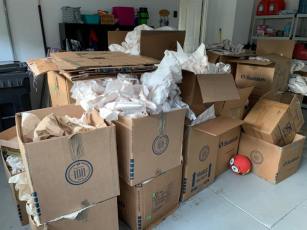
Look familiar? Just one batch of empty moving boxes and paper from our latest PCS move.  

With the support of our families, I moved back home during months-long deployments, which meant I didn’t have a lot of access to military-related resources at a base. While I may not have needed them at the time, looking back, I think about how different my life could have been. Our past few homes have had a large community military presence.

It was only this past fall that I became aware of an organization called Military No Stress PCS. A friend of mine saw they were looking for a military spouse to be the new program coordinator and she thought of me. After a lengthy conversation with MNSPCS founder Rob, I was the newest member of the Military No Stress PCS team. They were truly putting their money where their mouth was in terms of saying they support the military and actually supporting the military.

This program is presently in its infancy, but had it been something that existed when I was a new military spouse, it could have been a very valuable resource. We have PCS’d 8 times in 19 years and I could call myself an old hat when it comes to moving. If I had the opportunity to use this type of help when it comes to finding the answers I needed, you can bet I would use it.  

What is Military No Stress PCS?

 

Military No Stress PCS wants to help active-duty military families. 

• The idea of this program came from a civilian, in the real estate business in Florida, who met a military couple moving back to the States and were looking to purchase a house. During the real estate process, they became friends, and then, through this friendship, the civilian began to wonder about how he could help other military families. From this genuine desire to help military families, Military No Stress PCS was born.  

• At Military No Stress PCS, the commitment goes beyond the actual move and fosters a network of support and fellowship for our military community. Alongside active-duty members and spouses, we are supported by veterans and civilian volunteers,  representing all branches of our military family. It is all about giving back to the military community. 

• The Military No Stress PCS reach expanded to 87 CONUS locations and 12 OCONUS  locations in 2021. 

• Military No Stress PCS is funded by grants and donations and offers a personal concierge service completely free of charge. 

• Military No Stress PCS concierge service basics: they tell us what they’re looking for; whether that’s information on homes, neighborhoods, schools, commute times,  community involvement, local services, etc., and then we do the research and give them our highest recommendations.  

• Since beginning the concierge service last fall, Military No Stress PCS has had upwards of 75 inquiries on a variety of topics, such as housing, pediatricians, overseas orthodontists, school-aged care, and how to find local jobs.  

• Military No Stress PCS simply wants to support those who serve and their families by offering resources at no cost to them. For housing (rentals or buyers), we have real estate agents who are often military spouses themselves and/or are certified Military Relocation Professionals.  

• Military No Stress PCS also employs military spouses and retired military to ensure the recommendations are authentic and come from experienced professionals.  

• MNSPCS hopes to bring military families as many answers as possible for their PCS  questions (including questions they might have even after they’ve settled) and to reach beyond those resources to allow military families to find the same community aspects when moving from location to location, saving families the time and energy revisiting the search with each move. 

The information is out there in a thousand different locations. It can often be found by knowing the right places to search and the right keywords to type in. Sometimes, though, I am just plain tired of searching and that’s where Military No Stress PCS would come in.

There will be stress (that is a given) and there will be things that simply have to play out before the stress will be gone or even be merely reduced. These are just facts about military life. I have often found military spouses (myself included!) to be stubborn and strong and accepting help is not usually in our nature. After I had my twin boys, however, I realized how much help I needed and that some people genuinely want to help and the mission behind Military No Stress PCS is exactly that.  

This military life has brought my family so many opportunities, including a tour overseas. Let MNSPCS help reduce your PCS stress so you can enjoy your opportunities.

Filed Under: Guest Post, PCSing

Military Spouse Spotlight: Stacey on Friendship, Community, and Life as an Astronaut’s Wife

November 4, 2026 by Katie McDonald Leave a Comment

Stacey’s journey as an Army spouse has been shaped by the communities that have become home and the friends that have become family. When she married her husband, Drew, 26 years ago, she knew that his career as an Army physician would send them all over the country and the world, but she could never have imagined that he would, quite literally, be sent out of this world for nine months as a Space Operations Officer and NASA astronaut. She could not have imagined that they would call a tiny Pacific island home, let alone one of their favorite duty stations. She could not have imagined that she would be writing her second book, co-hosting a podcast, and serving as an executive leadership coach, all in the pursuit of supporting other mothers. 

How Do You Build Community as a Military Spouse?

Building community in military life takes intention, especially when PCS moves mean starting over again and again. Stacey’s advice is simple:

  • Find places where people regularly gather.
  • Show up more than once.
  • Introduce yourself even when it feels uncomfortable.
  • Follow up when you connect with someone.
  • Invite people instead of waiting to be invited.
  • Create the kind of community you wish existed.

You don’t have to meet everyone. You just need to start building a few relationships that can grow over time.

As she reflects on her years of obstacles and opportunities, Stacey sees a common theme of friendship. From the neighbors that supported her through years of deployments to the friends that stood by her side while her husband completed spacewalks to the women she could count on to make the ordinary days more exciting, Stacey’s community has helped her and her family to feel at home wherever the Army has sent them. 

“I have an incredible amount of freedom and peace knowing that wherever we go, I have the skills to begin creating the community I need,” she says. “Those aren’t skills reserved for a certain personality type. They’re skills anyone can learn.” 

How Military Spouse Friendships Can Carry You Through Deployment

Stacey’s first lesson in the importance of community came during the difficult years after September 11. As their friends deployed and one, tragically, was killed in action, Stacey felt the pain and worry that comes with war. Because Drew was finishing his studies to be an emergency medicine physician at the Uniformed Services University, he did not deploy right away, but when it was his time to leave, Stacey’s world changed.

It was “very hard to be on the sidelines and right into the Special Forces,” Stacey says, and describes feeling like she was “getting punched in the face by real life.” 

Luckily, Stacey was blessed with a supportive community near Fort Bragg. She didn’t need to explain her worries for her husband’s safety or the struggles of solo parenting because her neighbors were navigating deployment cycles alongside her. They were all committed to providing a sense of stability and normalcy for their children, and their resiliency and support for one another was transformative. Despite the stress and uncertainty of that season of life, Stacey describes those five years as some of the best of their career because of the “amazing military spouses who were there for all the highs and lows.” 

“We were all in it together. It was what you dream of in a military community and a circle of friends,” she says.

Those friendships showed Stacey the life-changing possibilities of community, and it gave her an example she has tried to emulate in all of the assignments that followed. 

Military Spouse Spotlight: Stacey Morgan on Friendship, Community, and Life as an Astronaut’s Wife

Stacey and her friend Allison Swenson skydiving together to celebrate Stacey’s 40th birthday, 2016

Creating Community at a Small or Isolated Duty Station

Creating that invaluable community may seem easier said than done, especially when your duty station may initially seem boring or isolating. Stacey knows this challenge firsthand; her family spent two years living in Kwajalein, an island that is only ¾ of a mile wide and 3.5 miles long. There were no cars, no cell service, and certainly no Amazon Prime 2-day shipping.

There was one tiny grocery store, no restaurants, and definitely no Starbucks or Target. It would be easy to assume this was a hardship tour, but Stacey and her family fell in love with the strong sense of community and the seemingly endless list of things they could do. What the island lacked in size, it made up for with ingenuity and a communal desire to create spaces and opportunities for socialization, recreation, and creativity. 

“You can’t wait for someone to come find you. Sadly, Amazon doesn’t deliver friends to our house. We have to go out and find them.”

— Stacey

“On a tiny island in the middle of the ocean, you understand pretty quickly that if you want something to happen, someone who lives there has to create it,” Stacey says. “You can spend your time wishing there were more opportunities, or you can help make one.”

Long-distance runners managed to organize marathons by doing a seemingly endless number of laps. Recreational activities from scuba diving to softball were organized, and people gathered for book clubs, dinners, and crafting groups. People’s willingness to create the spaces and activities they had been missing meant that the whole community thrived. The things that made Kwajalein feel like home were simple: people creating friendships over shared interests and opening their doors to their neighbors. 

“You have to be willing not only to join in, but to create something for other people to join,” she says. Whether that’s inviting your neighbors for a walk, bringing coffee to the playground, or hosting a casual craft night, there are so many ways to bring people together. You don’t need to create a formal organization to make community happen; you just need to create opportunities for people to feel welcomed. 

Military Spouse Spotlight: Stacey Morgan on Friendship, Community, and Life as an Astronaut’s Wife

Stacey and her battle buddy Cat Miller on Kwajalein, 2025

How to Find Your People as a Military Spouse

While Stacey’s story has so many examples of transformative friendships, she’s experienced her own seasons of loneliness. Military life inevitably means starting over again and again and saying goodbye to your hard-earned support systems. It’s never easy to be the new face in the crowd or to have the courage to show up in an unfamiliar space time after time, and it can be tempting to rely solely on your pre-established friendships. However, military life carries unique challenges, so “you need someone to give you a hug, to sit next to you, to wipe your tears,” Stacey explains. Building friendships is the key to truly thriving wherever the military sends you, but those connections take time and effort to cultivate.

You can’t wait for someone to come find you,” Stacey says. “Sadly, Amazon doesn’t deliver friends to our house. We have to go out and find them.” 

The first step to finding friends, she explains, is finding where communities gather. Maybe there’s a walking club in your neighborhood or a book club run by your library. These may not be your favorite activities or even ones you’ve tried before; the key is understanding that people are also attending those events looking for new connections and community. 

The next step is crucial: show up again. And again. And again. Friendships don’t develop overnight and need time and effort to flourish. If you have a fulfilling conversation, follow up on it with a text or at the next gathering. Don’t leave things up to fate; if you enjoyed spending time with someone, invite them to meet with you again

“Making friends isn’t always easy, but the first steps don’t have to be complicated,” Stacey says. “Get outside your house. Introduce yourself. Show up. Offer to help. Be willing to invite someone before you know whether she’ll become your closest friend.” 

Stacey’s Simple Friendship Formula

Making friends at a new duty station doesn’t have to begin with finding your future best friend.

  1. Get out of the house.
  2. Find somewhere people gather regularly.
  3. Introduce yourself.
  4. Go back again.
  5. Follow up when you connect with someone.
  6. Be willing to make the first invitation.

Friendships usually grow through repeated small interactions, not one perfect first meeting.

Why Military Spouses Need a Support System During Solo Parenting

Friendship has played a key role in helping Stacey to survive and thrive during difficult seasons of solo parenting. Between Drew’s Army and NASA assignments, Stacey navigated long stretches of solo parenting from her kids’ toddler years to their teenage years. One particularly difficult separation was her husband’s nine-month spaceflight, which ended in the early days of the COVID-19 pandemic.  

If you’re new to the stresses of TDYs, deployments, trainings, and the inevitably long and unpredictable days, Stacey believes there are two important things to remember. First, it’s important to reframe your expectations. 

“You are not carrying equal weight in parenting,” she explains. “If you’re resentful it’s not 50/50, you’ll always be resentful.” Your partner will not always be there for bedtime and pediatrician appointments and holidays and that distance is difficult. Having a community you can rely on when you’re feeling stretched thin is especially helpful to help you navigate through those seasons. Everyone can benefit from some extra encouragement and companionship and another set of hands to lighten the load. 

Second, Stacey believes trust and appreciation are essential. As the parent at home, you are making a million daily decisions to keep things running smoothly, and knowing your partner is confident in your abilities and appreciative of your work is a huge help. 

“The last thing I wanted from my husband while he was deployed, whether that was in Afghanistan or outer space, was a backseat parent,” she says with a laugh. “What helped was knowing he trusted me and appreciated what I was carrying at home.”

Homecomings, while joyous occasions, still require patience and support. After establishing new routines and enduring months of distance, families need time, space, and support to find their rhythm again. 

“It’s not all balloons and banners,” Stacey says. “Reintegration can be messy and awkward. It’s okay if it takes some time. Have grace with each other.” 

Having friends that understand and can support you through the unique challenges of these different seasons of life can help you to feel less alone. 

Military Spouse Spotlight: Stacey Morgan on Friendship, Community, and Life as an Astronaut’s Wife

Stacey and COL (Ret) Catie Hague at NASA Mission Control while their husbands’ completed a space walk together, 2019

Turning Military Spouse Experience Into Encouragement for Others

Stacey published her first book, The Astronaut’s Wife: How Launching My Husband Into Outer Space Changed the Way I Live On Earth, in 2022. By diving into her life as a military spouse, she was able to share her wealth of experiences and lessons. In addition to sharing her wisdom and talents with the military community, she has also pledged her financial support. She is proud to give back 100 percent of her author proceeds to charities supporting military families. After receiving years of life-changing support from the military community, she is grateful that she can extend her thanks and support. 

Because of her commitment to supporting women in building their community and finding fulfilling friendships, she works as an executive leadership coach for The MomCo, a nonprofit serving mothers. Through her work with the organization, she has seen a common thread of loneliness across varying ages and stages of life. From young adults struggling to make connections after college to new mothers whose relationships have shifted to older mothers who are worried about their daughters’ isolation, Stacey has been asked time and time again how to feel less alone and more connected. 

These conversations have inspired her to partner with her friend and coworker, Andrea Fortenberry, to write a practical guide on how to make and keep friendships. The concept is that the “short bingeable chapters for the pickup line or pediatrician office” will help you to initiate friendships, deepen existing connections, and navigate changes along the way. Stacey describes the book as “super practical, relatable, and funny” and says that it will include questions to think about and steps to follow. 

While everyone benefits from being able to make and keep friends, military families especially need to hone their skills because of their frequent relocations 

Military Spouse Spotlight: Stacey Morgan on Friendship, Community, and Life as an Astronaut’s Wife

Stacey and her MOPS/MomCo leadership team at MOMCON, 2013

What a Strong Military Spouse Community Really Looks Like

Stacey believes that the real measure of community is whether you can call someone when you need help. 

Do you have someone who can watch your kids during your dental appointment? When your car breaks down, do you have someone who could give you a ride? Do you have someone who can listen when your day has been overwhelming?  Similarly, are you able and willing to offer that same support in return? 

It takes time and effort to build those meaningful and lasting relationships. “They grow through ordinary invitations, repeated conversations, shared experiences, and the willingness to let someone know you need them,” Stacey says. 

The way Stacey builds community can be practiced by anyone, no matter where they live or what season of life they’re in. 

“You don’t have to know everyone, and you don’t have to have it all figured out,” she says. “Start by showing up. Invite someone to join you. Be willing to help create the community you’re hoping to find.” 

As a Navy wife and new mother myself, I thought moving overseas would mean weeks or months of loneliness. However, my conversation with Stacey inspired me to follow her simple steps for connection. Within just a couple of weeks, my calendar was filling with coffee dates, dinner invitations, playgroups, and Bible studies. I felt an emotional heaviness lift knowing I wasn’t alone. I had the security of being able to ask for help when I needed it, and I had space to share my frustrations on hard days. Having a community truly is life-changing, and making friends, while intimidating, is well worth the time and effort. 

Katie McDonald is a Navy wife, and she and her husband are currently stationed in Guam. After 5 years as an English teacher, Katie is currently working as a freelance writer and enjoys writing about books and travel. https://www.katiereads.com/

You can find Stacey on her website at https://www.staceymorgan2000.com/!

Frequently Asked Questions About Building Community as a Military Spouse

How do military spouses make friends at a new duty station?

Start by finding places where people regularly gather, such as walking groups, book clubs, spouse groups, volunteer organizations, faith communities, neighborhood events, or activities connected to your interests. Introduce yourself, keep showing up, and follow up with people you enjoy talking to.

What if I feel lonely after a PCS?

Loneliness after a PCS is common because military families repeatedly leave established support systems behind. Give yourself time, but also look for opportunities to connect with people locally. Friendships often take repeated interactions before they begin to feel comfortable or meaningful.

How can military spouses create community at a small duty station?

If your duty station doesn’t offer the activities or groups you’re looking for, consider starting something small yourself. Invite a neighbor to walk, organize a casual coffee meetup, start a book club, or ask a few people to join you for an activity you already enjoy.

Why is community important during deployment?

A trusted support system can provide practical help, companionship, encouragement, and understanding during deployments and other military separations. Having people nearby who understand military life can make difficult seasons of solo parenting feel less isolating.

Do you need a large group of friends to have a strong military spouse community?

No. A meaningful community doesn’t have to be large. A few trusted people you can call for help, talk with on difficult days, and support in return can be more valuable than knowing everyone at your duty station.

Filed Under: Military Spouse Spotlight Tagged With: finding friends after PCS, finding your people, making friends as a military spouse, military spouse community, military spouse deployment support, Military Spouse Friendships, military spouse loneliness, military spouse support system

18 Military Spouse Deployment Quotes to Get You Through the Hard Days

September 29, 2026 by Julie Leave a Comment

18 Military Spouse Deployment Quotes to Get You Through the Hard Days

Sometimes, hearing inspiring military spouse deployment quotes can be just what you need to get through a difficult deployment day.

Over the years, military life has changed. From the way you PCS to how TRICARE works. But one thing that always seems true is that service members will be deployed.

While things are different from when my husband re-joined the military in 2005, military spouses are still saying goodbye to their loved ones for deployments and other times apart. Military spouses are still having to live without their partner for months at a time. Military spouses are still figuring out how to get through deployments.

Sometimes, hearing a good quote or truth about military life can be just what you need to get through a difficult deployment day.

Here are 18 military spouse deployment quotes that can do just that. I hope that they help you get through the next day, next week, or even month of your deployment. I hope that you can remember them during your more difficult days, and be inspired.

Deployments are not easy, and we could use all the help we military spouses can get to get through them.

Military Spouse Deployment Quotes to Get You Through the Next Deployment

The end of a deployment is a good time to try something new. A new hobby, a new habit, or a new way of doing something. Mix it up a bit, that will help the time go by a bit faster.

Sometimes you have to take your current struggle one day at a time. Other times you have to take it an hour at a time.

The best types of friends are those who let you vent about deployments, bring you boxes when you PCS, and help you laugh about life as a military spouse.

You will find that the first and last month of the deployment are the hardest. Do what you can to make it through the deployment days and homecoming will be your reward.

Whenever I feel like I can’t accomplish something, I think about how I solo parented three children, for nine months, and only lost my mind, 55.5 times.

Military spouses are strong not because we are made of something else. We are strong because we have to be. Because history wanted us to fill this role and we decided we could do it.

We wait, we love, we hope, we pray…until they are back in our arms again.

Take your deployment one week at a time…one day at a time…one hour at a time.

You might go a few weeks feeling like you got this and then hit a period of time when you feel like you can’t. The important thing is to “just keep swimming.”

Don’t base the status of your life on a bad deployment day. Those days come and then they go. They do not last forever!

When time stands still, think of something to focus on. Go for a walk, dive into a book, or call a friend. You got this!!!

Use a deployment for a time to explore. Get out and do something you and your kids have never done before. Don’t be afraid to make memories. Don’t be afraid to have fun just because one parent is away.

Solo parenting got you down? Pick your cure: 1) A tub of ice cream, 2) a glass of wine, 3) a binge-worthy Netflix show, 4) all of the thee above x 2.

Not all military children handle a deployment in the same way. You know your child, do what is best for them.

The pre-deployment period is going to be stressful…make time for one another, be understanding, and try not to worry too much about the future.

Roses are red, violets are blue, deployments suck, that much is true.

Don’t ever think you have to be the “perfect” military spouse. Be you. Life is easier that way.

If you have just started a deployment and feel a bit lost, remember you are not the only one going through this. So many other military spouses have done the same. Take these military spouse deployment quotes to help you through.

What helps you the most when you are going through a deployment?

Filed Under: Deployment Tagged With: Inspiring Quotes for a Deployment, military spouse

Why Kindness Really Matters in the Military Spouse Community

September 17, 2026 by Julie Leave a Comment

Why Kindness Really Matters in the Military Spouse Community

After so many years of running a military spouse blog and social media accounts, it still makes my heart hurt when I see people being unkind.

Whether it’s acting like military spouses don’t have the right to their own community or flat-out calling people names when they disagree, it’s heartbreaking to see.

Kindness always matters, and the military community needs it.

Military Life Is Complicated Enough

It goes without saying that military life is complicated. It can be really challenging sometimes, and we as a community sometimes need extra grace and patience as we work through the hard stuff.

Deployments, PCS moves, solo parenting, career changes, loneliness, and uncertainty can already leave military spouses feeling stretched thin. A supportive community can make those seasons easier, while an unkind one can make them feel even harder.

Having to deal with an unkind person along the way? To have to decide if an FRG meeting is worth it because of the drama? To be afraid to reach out to another military spouse? Totally not cool. We can do better.

“Military life is complicated enough. We do not need to make it harder for one another.”

Why Kindness Matters in the Military Spouse Community

The truth is, we don’t know what someone else is going through. We don’t know all of their struggles. We don’t know the pain or stress they might be going through. So kindness matters.

Kindness matters when you are answering a question on Facebook. Remember, anyone can see what you write on a public page. Even your grandma.

Kindness matters in your local community. In your neighborhood. In your daily lives.

Kindness makes the world a better place, and kindness helps the military community be the best version of itself.

Small Acts of Kindness Go a Long Way

Thankfully, I have seen a lot of kindness during my time as a military spouse. From other spouses being there for another spouse who has a child in the hospital to bringing food to another who is feeling a little overwhelmed with military life.

Kindness doesn’t even have to be big. It doesn’t mean you have to change the world for someone. It just means that you look at the other people in your community with grace and work to make it a better place.

Small Ways to Show Kindness to Another Military Spouse

You do not have to do something huge to make military life a little easier for someone else.

  • Check in. A simple text during deployment or another difficult season can mean a lot.
  • Answer questions with grace. Remember that every experienced military spouse was new once.
  • Share helpful resources. If something helped you, pass it along without judgment.
  • Include someone new. Invite the new spouse, neighbor, or parent to join you.
  • Know when not to comment. Sometimes kindness means scrolling past instead of adding something hurtful.

Military Spouses Need Kindness Online, Too

With the state of the world today, kindness matters even more. Be an example. Be the better person. All of that matters.

How to Respond With Kindness on Social Media

Some people thrive on making people online feel bad. People they have never met in real life. And for what? Why tear others down when you could just easily build them up?

Don’t like what someone has to say? That’s okay; you don’t have to agree, but I know you know the right and wrong way to respond.

If you see someone struggling, lend a hand in any way you can. Maybe it is just a smile emoji; maybe it’s letting them know about a resource that worked for you. Maybe it’s simply letting them have their space and not commenting at all.

We are all adults, and there is no reason we should see so much nastiness in our military spouse Facebook or on social media accounts. We are all so much better than that.

We Can Build a Better Military Spouse Community

Being kind, whether online or in person, will make our communities, our countries, and our world a better place.

Do what you can, smile, and show kindness wherever you go. Our military spouse community doesn’t have to stay in the hater zone.

Frequently Asked Questions About the Military Spouse Community

Why does kindness matter in the military spouse community?

Military spouses may already be dealing with deployments, PCS moves, solo parenting, career changes, loneliness, and uncertainty. A kind and supportive community can make those difficult seasons feel less isolating.

How can military spouses be kinder online?

Answer questions patiently, avoid name-calling, remember that there is a real person behind the screen, share useful resources, and consider whether a comment will actually help before posting it.

What are simple ways to support another military spouse?

Check in during hard seasons, bring a meal, invite someone to coffee, share a helpful resource, welcome new spouses, or simply listen without trying to fix everything.

What should I do if a military spouse group feels toxic?

You are allowed to step back, set boundaries, leave unhealthy online spaces, and look for communities where people are supportive and respectful.

Filed Under: Military Life Tagged With: FRG, Military Community, military spouse community, military spouse encouragement, military spouse Facebook groups, military spouse friends, military spouse kindness, Military spouse life, military spouse support, online kindness

Why Your Military PCS History Matters More Than You Think

September 16, 2026 by Guest Writer Leave a Comment

Military families, depending on their time in the service, will go through many permanent changes of station, a PCS. While this is no doubt stressful and some record-keeping may fall by the wayside as a result, history has shown that it may be very beneficial for military families to keep good track of their moves.

This doesn’t have to be a massive undertaking, but it should become part of every PCS. Record the address, the date of service, the installations, where you will be working, and any renovations that may be done.

Housing and Environmental Concerns Can Show Up Later

One environmental concern military families may encounter in housing is mold. Mold exposure can cause respiratory irritation, aggravating asthma and other existing respiratory conditions. If someone develops persistent breathing problems years later, knowing where they lived could give a healthcare provider much-needed additional context. However, it doesn’t stop at just mold, nor does it stop at the housing itself.

The Department of Veterans Affairs has even helped process these concerns with the VA’s Military Environmental Exposure Assessments (MEEA), which document all of your concerns and potential exposure histories, including work stations. According to the VA, this exposure spans a wide range: chemicals, air pollutants, contaminated water, radiation, burn pits, chemical warfare agents, and other toxic substances. Knowing where you were stationed and for what period with 100% certainty is a massive help.

Lesser-Known Hazards in Your Home

Over the past few decades, military bases have been renovated, closed, or demolished due to health concerns associated with them. According to the Mesothelioma Veteran Center, asbestos in army barracks has been found as recently as 2022! Asbestos exposure can result in asbestosis as long as 50 years after contact. While you may change station to somewhere that is safe as far as we know now, it could, in a decade or more, be recognized as a potential risk.

Unfortunately, these concerns can extend to the family as well. A hazard like asbestos can lead to secondary exposure, as seen in cases like the now-defunct Fort McLellan. Asbestos would find its way onto the service member who would bring it home, potentially exposing their family to it as well.

It is crucial to note that not every military base that has a hazard will have affected everyone who was stationed there. This is part of the reason good record keeping is so crucial. What may be considered a benign condition may come under a lot more scrutiny if your PCS history shows a 5 year stay at an installation that is later suspected to have potentially exposed service members (or their families) to asbestos, lead, mold, or toxic chemicals.

PCS Record Keeping Does Not Have to Be Complicated

Just because bases have had exposure risks in the past doesn’t mean it will definitely happen again. Your average PCS will likely not expose you to such a harmful hazard, but because it has a possibility, keeping track of where you moved and for how long can be instrumental in supporting your family’s health long-term.

Military spouses often become the unofficial historian of their family’s life, keeping copies of orders, addresses, and school records. Keeping a good record of a problematic PCS doesn’t have to be much different. The goal isn’t to worry about every house or every base, it is simply to keep the history. Keep notes about significant housing or environmental problems alongside the address and date/duration of the PCS. If an unexplained health issue eventually arises, a healthcare provider could make use of that history.

While a PCS may only last a year or two, the record you keep could remain useful for a lifetime.

Your PCS Record-Keeping Checklist

After each military move, save a simple record of where your family lived and anything significant that happened while you were there.

  • Address and duty station: Keep the complete address and installation name.
  • Dates: Record when you moved in and when you moved out.
  • Orders: Save copies of PCS orders and other relevant military documents.
  • Housing problems: Keep records of mold, leaks, renovations, maintenance requests, or other major concerns.
  • Photos and paperwork: Save photographs, emails, inspection reports, and repair documentation when something significant occurs.
  • Work locations: Service members may also want to document units, work sites, deployments, and known occupational or environmental concerns.

Frequently Asked Questions About Keeping PCS Records

What records should military families keep after a PCS?

Military families may want to keep PCS orders, addresses, move-in and move-out dates, installation information, housing inspection documents, maintenance requests, photographs, and notes about significant housing or environmental concerns.

Why should military families keep old addresses?

Keeping old addresses can help families reconstruct where they lived and when. That information may later be useful for school, employment, benefits, housing, or health-related questions.

What is the Individual Longitudinal Exposure Record?

The Individual Longitudinal Exposure Record, or ILER, is a military system that brings together documented occupational and environmental exposure information from a service member’s military career.

What should I save if military housing has mold or another serious problem?

Consider saving photographs, maintenance requests, emails, inspection reports, repair records, dates, and information about where the problem occurred. If you have health concerns, discuss them with an appropriate health care provider.

Filed Under: Guest Post, PCSing Tagged With: asbestos, duty station history, ILER, military environmental exposure, military family health, military family records, military housing, Military PCS, mold, PCS records, PCS tips

Military Spouse Spotlight: From Army Brat to Army Wife

August 27, 2026 by Katie McDonald Leave a Comment

From Army Brat to Army Wife

Many military spouses take the endless algorithm of military-family-affiliated influencers for granted. We have seen the homecoming videos, the disappointments over extended deployments, the anxiety and excitement about PCS season, and the memes that speak to the unique quirks of military life.

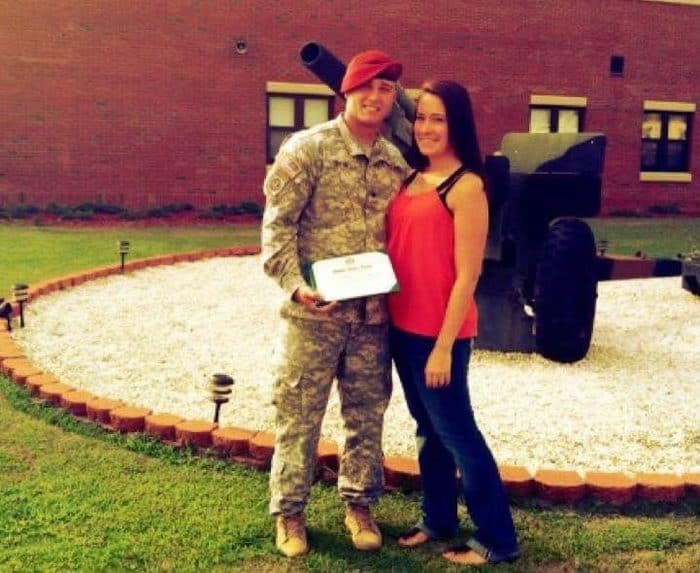
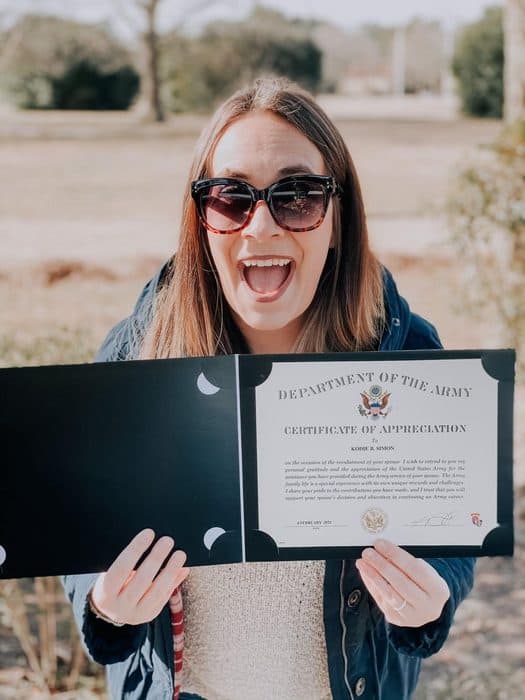
Kodie, an Army wife, mother of seven, and social media agent, is partially to thank for that because of her work in the KoFe Confessions podcast and associated social media platforms. Dedicated to sharing helpful, relatable insights from her authentic life, Kodie’s story began as a brand-new Army Brat and ends as a senior enlisted wife working to drive positive culture change.

From Army Brat to Army Wife

Finding Stability in Army Life

Kodie grew up in rural Arizona with fond memories of her mom and grandpa roping and moving cows through the chute. However, Kodie’s life radically changed in 2000 when, after years of being single, her mom married an Army soldier. Not wanting to welcome her new stepfather into her life, Kodie spitefully chose to live with her biological father in California. Unfortunately, Kodie did not realize how much her father drank or how much his drinking would impact her life, and she categorized this year as “highly traumatic” because of her father’s abuse. 

With California living being unsuitable and unsustainable, Kodie flew to Fort Bragg to live with her mom, stepfather, and siblings again. Having grown up around flat deserts, the overcast and humid weather, and lush green trees stuck with her, and the North Carolina summers take her right back to that pivotal childhood moment. 

Life with her stepfather was strict and came with new rules, but it also gave her family financial freedom they had never enjoyed before. “All the things I never had, I was allowed to have,” Kodie remembers with gratitude as she detailed the beautiful power of hearing “yes” at the store and the dentist. With two incomes and healthcare, she was able to get braces, buy clothes for the school year at the mall, and pick out things that she liked.

As a single mom, Kodie’s mom took her children through the store with a purpose, and purchasing Skittles was the extent of the treat they could expect. Kodie remembers the luxury of just walking through the store with her stepfather and him telling her, “Oh, do you like that; go buy it.” While she couldn’t fully realize the luxury of having $11,000 in dental work being covered by insurance as a kid, she knew that the “peace that brought my mom also brought me peace.” She instantly fell in love with the stability of her new North Carolina home and could even admit that her stepfather was cool. 

How 9/11 Changed Military Family Life

Life changed again for Kodie and thousands of other military Brats on 9/11. Kodie remembers her mom stopping for cigarettes after Kodie’s orthodontist appointment and the cashier telling them that the Twin Towers had been hit. Kodie was dropped off at school and couldn’t fully understand the fear and sadness that struck the adults around her so deeply. Because Fort Bragg is known for its global response, the community knew their soldiers would be deploying and that their friends and family might not come home. 

Kodie’s family moved into military housing and her stepfather deployed, but Kodie didn’t fully understand the emotional weight of the situation. She remembers her mom forbidding her from using AOL dial-up because she never knew when her husband would be able to call. Her mom would fill moving boxes to the brim with care package items, but Kodie would sneakily open the mint Oreo packages and take a few of the cookies for herself. 

While her mom and stepfather separated her junior year and were divorced in her senior year, Kodie’s brief time with her stepfather left a lasting impression on her; the military, in her youthful memory, was romanticized as an institution of stability for her young family, and she admired the brotherhood of the men her stepfather served with. 

From Army Brat to Army Wife

Marrying a Soldier 

After her senior year of high school, Kodie’s mom and siblings moved back to Arizona, but Kodie, totally focused on her on-and-off boyfriend, wanted to try and make North Carolina work. Ultimately, the relationship failed, and Kodie briefly rejoined her family. She returned to North Carolina in the spring of 2011, when she was 21, to visit her friends, and she had so much fun visiting all the places she could now fully and legally enjoy.

As she and her friends went bar hopping, she was caught up in the excitement of being surrounded by attractive soldiers. In fact, she was having so much fun that she didn’t want to return home. When her friend offered her a place to stay and suggested she apply for work in North Carolina, Kodie called her mom for advice; shockingly, her mom told her that it was up to her to make that decision for herself, so, of course, Kodie decided to stay where the fun was. 

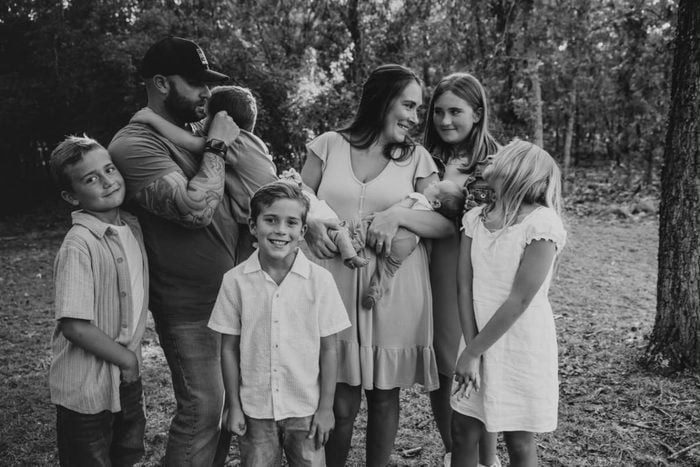
Kodie spent her nights partying and exploring the online dating pool, but her life suddenly became serious and settled when she met her husband in 2012. While she wasn’t looking for anything serious, they immediately bonded over their small hometowns in Arizona, and they never stopped seeing each other after that pivotal first date. They were married just thirty days after meeting and have now been together for fourteen years and have had seven children. 

Solo Parenting During Deployments

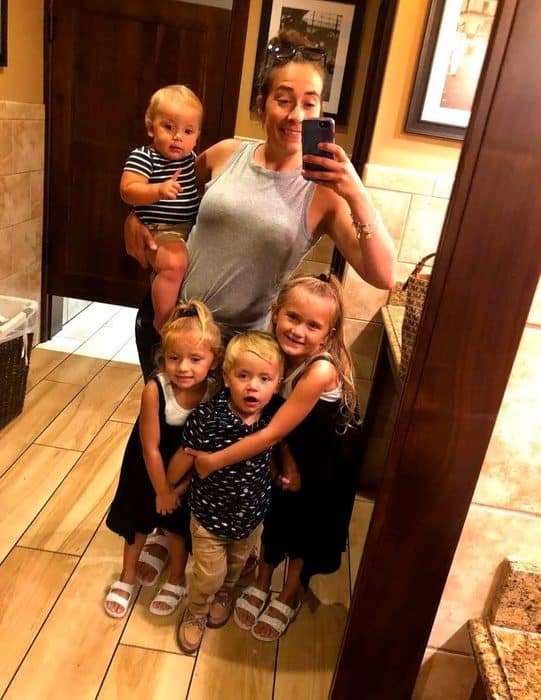
Kodie’s early years of marriage were a whirlwind of stress and change. Her husband deployed for a year when she was fourteen weeks pregnant with their first child, and while he was home for their second child, Kodie’s diagnosis of Crohn’s disease added additional challenges. He was deployed for the birth of their third child and deployed yet again shortly after the birth of their fourth. Each child was seventeen months apart, so Kodie was managing 4 kids under 5 years old in 2019 when her husband left for a 9-month deployment to Afghanistan. 

From Army Brat to Army Wife

Finding Her Voice Through KoFe Confessions

Understandably, Kodie was feeling lost in 2020 after years of solely putting her focus into solo motherhood. “I didn’t know who I was anymore…I wanted a hobby. I wanted something for myself,” she explained. She wanted to harness her passion for creativity and storytelling, so she and a friend decided to start a podcast together for military spouses called KoFe Confessions.

“For the first time, someone was being vulnerable on the Internet,” Kodie said with pride, and she emphasized how important it was to her to be real about the “good and the suck” of military life. KoFe Confessions was one of the first military spouse podcasts, and Kodie believes they “set the caliber and tone for who has come after.” 

Of course, Kodie, like many military families who have voiced their opinions and experiences, has faced scrutiny for sharing her thoughts online, but she said all the hate has been worth it because she was able to help other women feel less alone. “It felt good to share inside thoughts and have people relate and not feel crazy,” Kodie said. 

“It felt good to share inside thoughts and have people relate and not feel crazy.”

— Kodie

When Military Spouse Stories Help Others Feel Less Alone

They recorded the first three episodes in the car because they were both busy solo moms. Kodie and her friend would purchase pizza and root beer for their kids and have them play on the trampoline so they could sneak in a few quiet minutes to record. They were amazed to see their following skyrocket across social media, and over the course of six years, they wrote a book, recorded multiple podcast seasons, and shared a wealth of resources with the military community online.

She fondly remembers the surreal moment when Facebook invited them to join their monetization program and the first payment landed in their account. She realized in that moment that “we made something; this can go somewhere,” and she loved that she could creatively share her story and advice while bringing in additional income for her growing family. 

However, after six years of sharing military-spouse-themed content in partnership with her friend, Kodie is now creating her own content more focused on her own motherhood experiences. While she loved sharing resources, she felt tapped out after six years of constant content creation focused on the same niche topic, and she felt the messy weight that can come with responding to the social media news cycle.

She and her friend had different creative visions, and ultimately, Kodie found peace and satisfaction in a new focus on her own family and twin pregnancy experience. She has since created her own social media agency and currently creates content for two small businesses. She loves that she can “go into small mom and pop businesses and create something that goes viral,” and she especially appreciates that unadulterated joy after years of being called a “dependa” in her comment section. 

From Army Brat to Army Wife

The Challenges of Military Childhood

Kodie has a lot of compassion for her kids and all of the ways that military life has presented them with challenges. Moving every few years forces them to create a new set of friends over and over again, and it hurts Kodie that she “can’t control that heartbreak and know it’s not going to stop.”

When they were living in Colorado, her daughter cried at the injustice that her classmates’ dads who were in the Space Force were able to come to their kindergarten performance, but her dad couldn’t because he was too busy with Army duties. The kids would always ask, “but you’re going to come back, right?” when their dad would leave, and one of Kodie’s daughters could not relax until her dad’s uniform was taken off at home because she associated it with him leaving.

When the Army Comes First

In 2022 Kodie’s husband went from Special Forces Selection to Senior Leader Course to the Drill Sergent Academy back to back to back. Her son didn’t want to start on sports until his dad was home to watch him, but Kodie said, “if you drag your feet waiting on your dad, you’re going to be heartbroken because the Army comes first.” With a bit of humor and heaps of encouragement she recalled saying to him, “you can’t pass up on opportunities because you’re afraid your dad won’t be here; he wasn’t here for your birth.” 

From Army Brat to Army Wife

Creating Positive Change as a Senior Enlisted Spouse

As a first sergeant’s wife, Kodie wants to “help create something supportive of his troops.” There are plenty of hardships in Army life, so “let’s be part of something that creates change.” When someone in the unit has a baby, she wants to send diapers and dinner to offer much-needed support.

Instead of waiting on someone to ask for help, she wants to be proactive and step in to assist. “If we set the example, maybe others will follow,” she hopes. However, she has to combat the unhelpful culture of “we figured it out, you should too.” Everyone faces their own set of obstacles and challenges, but wearing your “hardships like badges of honor” and treating your suffering as a competition only continues and feeds into the stresses the military community carries. Kodie remains committed to not gatekeeping valuable resources, and she hopes to write a book inspired by her life one day. 

From Army Brat to Army Wife

What Military Spouses Can Take From Kodie’s Story

Kodie’s story is about growing up around Army life, becoming an Army wife herself, surviving years of solo motherhood, using her voice online, and choosing to create change instead of gatekeeping support.

  • Your story can help someone else feel less alone. Sharing the honest parts of military life can give other spouses the words they did not know they needed.
  • Motherhood and military life can change you. Deployments, babies, moves, and constant responsibility can make it hard to remember who you are outside of survival mode.
  • Military kids carry their own version of this life. They notice the missed events, the uniforms, the goodbyes, and the uncertainty more than we sometimes realize.
  • Positive change starts with people willing to show up. A meal, diapers, a resource, or a simple check-in can make a hard season feel less lonely.

Katie McDonald is a Navy wife, and she and her husband are currently stationed in Guam. After 5 years as an English teacher, Katie is currently working as a freelance writer and enjoys writing about books and travel. https://www.katiereads.com/

Filed Under: Military Spouse Spotlight Tagged With: Army brat, army spouse, army wife, deployments, KoFe Confessions, military kids, military spouse creator, military spouse motherhood, Military Spouse Spotlight, military spouse story, solo parenting

What It Actually Costs to Ship Your Car During a PCS in 2026

August 10, 2026 by Guest Writer Leave a Comment

What It Actually Costs to Ship Your Car During a PCS in 2026

How Much Does It Cost to Ship a Car During a PCS?

If you’ve got PCS orders and two vehicles, one problem shows up fast: you can only drive one of them. A spouse flies ahead, the second car won’t make the trip, or you’re headed somewhere a cross-country drive just doesn’t make sense. Shipping the car becomes the obvious fix — but nobody tells you what it actually costs until you’re already stressed and calling around. Here’s the real 2026 picture, minus the sales pitch.

The Short Answer: Typical PCS Car Shipping Costs in 2026

For a standard car moving cross-country (say, Fort Cavazos/Fort Hood, TX to Fort Liberty/Fort Bragg, NC — around 1,200 miles), expect roughly $900–$1,400 on an open carrier in 2026. Shorter regional moves (300–500 miles) usually run $500–$800. Coast-to-coast (2,500+ miles) lands around $1,400–$1,900. Enclosed transport — worth it for a classic or low sports car, overkill for a daily driver — adds 40–60% on top.

What Affects the Cost to Ship a Car?

  • Distance — but not linearly. Longer moves cost more total, but less per mile.
  • Vehicle size — a lifted truck or full-size SUV costs more than a sedan.
  • Open vs enclosed — open is what ~95% of PCS families use; enclosed is premium protection you probably don’t need.
  • Pickup/drop-off location — right on a major interstate is cheap; a remote duty station or rural address costs more.
  • Timing — the big one for military families (below).

Will the Military Pay to Ship Your Car During a PCS?

Sometimes — and this trips up a lot of families. For most OCONUS moves, the government ships one privately owned vehicle for you. For CONUS PCS moves, you’re generally reimbursed for driving (mileage/MALT + per diem), not for shipping — so if you’d rather ship, it’s usually on your dime. Before you pay anyone, confirm your specific entitlement with your TMO / transportation office. Rules vary by move type and change year to year — don’t take a broker’s word for what the military covers.

Before You Ship a Car During a PCS

Shipping a vehicle can make PCS life easier, especially for two-car families, but it is worth slowing down before you book.

  • Confirm your entitlement first. Ask your TMO or transportation office what your specific orders cover before paying out of pocket.
  • Run the real math. Compare shipping costs with gas, hotels, meals, time off work, wear and tear, and plane tickets.
  • Book early during PCS season. Summer moves often mean higher demand, higher prices, and tighter pickup windows.
  • Get more than one quote. A quote that is far lower than the others can be a red flag, not a lucky break.

Should You Ship or Drive Your Second Car?

Driving: MALT + per diem, minus gas, hotels, food, wear on the car, and 2–4 days on I-40. Shipping: the transport quote + a plane ticket for whoever isn’t driving the other car. For a lot of two-car families, once you add a flight and a couple hotel nights to the “drive” column, shipping the second car comes out close to even — and you arrive rested instead of wrecked. Plug your route into a car-shipping cost calculator for a real number before you decide.

Timing is Everything During PCS Season

Peak PCS season (May–August) is also peak demand for auto transport: carriers get picky, prices climb, pickup windows stretch. Two things help:

  1. Book 2–3 weeks out, not two days.
  2. Stay flexible on the pickup date — a 3–4 day window beats “must be Tuesday.”

If your orders land in summer, assume the higher end of those ranges and book early.

How to Avoid Overpaying for PCS Car Shipping

  • Get 3 quotes. A number far below the others isn’t a deal — it’s a lowball to hook you, and the car often sits until they raise it.
  • Know broker vs. carrier. Most companies you call are brokers posting your job to carriers — that’s normal. Don’t pay a large deposit up front; a small booking fee is fine, balance due on delivery.
  • Confirm insurance. Ask for the carrier’s cargo insurance certificate; your personal auto policy usually won’t cover transport damage.
  • Do the inspection. Photograph the car at pickup and delivery and note existing dings on the bill of lading — that paperwork is your only leverage if damage shows up.

Bottom Line for Military Families Shipping a Car

Shipping a car during a PCS in 2026 runs most families $900–$1,400 for a typical cross-country move, more in summer and for bigger vehicles. Confirm what the military covers with your TMO first, get a real estimate for your route, book a couple weeks out, and get three quotes. Do that, and the second car shows up in one piece while you keep your sanity — which, mid-PCS, is worth a lot.

Frequently Asked Questions About Shipping a Car During a PCS

How much does it cost to ship a car during a PCS?

The cost depends on distance, vehicle size, location, timing, and whether you choose open or enclosed transport. For many cross-country moves in 2026, families may see quotes around $900–$1,400 for a standard car on an open carrier, but your exact route can change the price.

Will the military pay to ship my car during a PCS?

It depends on your orders and move type. For many OCONUS moves, the government may pay to ship one privately owned vehicle. For many CONUS moves, families usually drive or pay to ship a vehicle themselves and receive authorized travel allowances instead. Always confirm with your TMO or transportation office.

Is it better to ship or drive a second car during a PCS?

Run the numbers both ways. Driving may be cheaper, but shipping can save time, stress, hotel nights, gas, wear and tear, and the challenge of getting two vehicles across the country.

How can military families avoid overpaying for car shipping?

Get at least three quotes, check whether you are dealing with a broker or carrier, verify registration and insurance, avoid suspiciously low quotes, and take photos during pickup and delivery.

Filed Under: Guest Post, PCSing Tagged With: car shipping, CONUS PCS, military move, Military PCS, OCONUS PCS, pcs, PCS season, vehicle shipping

Military Spouse Spotlight: Learning to Love Each Duty Station

August 4, 2026 by Katie McDonald Leave a Comment

Military Spouse Spotlight: Claire

If you’re a military spouse, you’ve probably heard the phrase “bloom where you’re planted” more times than you can count. The advice is well-meaning and helpful, but when, as Claire puts it, your roots have been ripped out again and again, how do you find the spirit within you to grow, let alone bloom? 

Claire’s husband is a Navy pediatrician and dive medicine doctor, and his training and service have taken their family of six from one coast to another and, most recently, across the Pacific to Hawaii.

Claire chronicles their travels and shares her tips and tricks through her Instagram account, Coastal.adventurefamily.

love each duty station

Starting Their Navy Medical Journey

While Claire and her husband grew up in Las Vegas near Nellis Air Force Base, they weren’t familiar with the realities of military life; for example, Claire was surprised to learn that Nellis AFB had its own movie theater. However, the couple had married “kind of young” and were about to embark on a significant change: medical school.

Claire described herself as “fiscally conservative” but her husband as “very frugal,” so he was eager to find ways to reduce or eliminate the weighty costs of medical school. While they were walking down the street together, they discussed the idea of having him join the military. One of her husband’s cousins had joined the military to pay for his medical school, and Claire thought that joining the Navy would be fun because they would be by the ocean.

Naively, she rejected the idea of the Air Force because she didn’t want to stay in Las Vegas; seeing how far the military can send her family, Claire can look back at her thought process and laugh. After praying together about the decision, they met with a recruiter, and it all felt “seamless.” In fact, there was “no doubt in my mind…we knew that’s what we were supposed to do.” 

That is not to say, however, that their military journey was not without its challenges. Claire gave birth to their first child just two weeks before her husband started medical school, their second during her husband’s OB clinical rotation, their third three weeks before her husband left for dive school, and COVID separated their family for months, and their fourth when her husband served as a dive officer before completing his residency.

The family has crisscrossed the country, accepting billets that were far from their dream locations and starting over again and again when it came to jobs and friendships. Nonetheless, Claire has found ways to thrive in each duty station and discovered new and unexpected joys in her military and personal journeys. 

The Eras of Military Life and Motherhood

Like Taylor Swift, Claire categorizes their military journey into “eras.” Reno, where her husband attended medical school, was her “motherhood” era, where she learned how to be a mom. Before her husband started medical school, Claire was an adjunct anatomy and physiology professor with aspirations to get her Master’s in Global Health at the University of Utah. Having their first child represented a major shift in her life; no longer in school or working, Claire found herself relying on her new best friend to navigate the early days of motherhood. The two later shared a middle school teaching position together before Claire shifted to working retail.

Claire found humor as she relayed what could have been the stressful circumstances of her second birth. Her husband was on his OB clinical rotation while she was in labor, and, due to unforeseen circumstances, got a little extra delivery practice. Claire had the rare opportunity to do a hospital water birth, and because the nurse didn’t believe her when she said the baby was coming, her husband unintentionally stepped in to catch their second baby. Ironically, the timing meant that he missed his OB shelf exam, but at least he got some hands-on experience instead.

Learning the Importance of Community

Her husband did his intern year at Portsmouth Naval Hospital, which Claire dubbed her era of “community.” She and her kids lived in a tight-knit neighborhood for two years where “I learned the importance of community and the beauty of friends becoming family and exploring where you live.” Their eight neighbors became their lifelines during this uniquely busy period. She loved living on the East Coast—a place she had romanticized—for the first time, and she made the most of exploring their new home. However, the rosy glow faded a little with the birth of their third child. 

Because of their newborn daughter’s medical condition and the young ages of their two older children, Claire and her husband thought it would be best if she and the kids stayed in Virginia while he rotated between Connecticut and Florida for dive school. While they would be separated for months, they took solace in knowing they would visit each other when they could. However, just a couple of months into her daughter’s life and her husband’s training, COVID took the United States by storm, and their plans of being together as a family were put on hold. The family was separated from January to July 2020, and Claire packed up and moved with her kids to San Diego without her husband. She was heartbroken to leave behind the strong support system that she had so relied on through this difficult period. 

love each duty station

Creating a Home at a New Duty Station

Looking back on this move, Claire admitted that she was sad that they didn’t get to stay in Virginia. Like so many military families, she had made a plan, she had her dreams, and she had her comfort zone, but she was unexpectedly forced to scrap it all for a place far from what she chose or wanted. They lived in military housing for the first time, and while they did make some strong friendships, they didn’t have the same instant community as Virginia.

Rather than dwelling on all that she had lost, Claire took advice from the life-changing book, This is Where You Belong: The Art and Science of Loving the Place You Live by Melody Warnick. Dubbing this her “exploring” era, Claire and her family fell in love with biking, especially to the beach. Walking and biking, Warnick advised, helps families to see their communities in a new light, and those early emotional connections are key for transient military families. 

In addition to biking, Claire and her family have discovered that finding the familiar and establishing routines that align with their family culture are key to making a new city feel like home. For example, because Claire is an avid runner, finding a 5-mile running route “helps me feel more connected to a place.” Similarly, finding parks, libraries, and grocery stores gives them a sense of normalcy and familiarity.

Creating Connection Through Faith, Routines, and Exploration

Because their family is Mormon, their temple gives them a sense of peace and the reminder that not everything around them is strange and foreign. While each church community might be a little different, the beliefs and architecture provide a sense of peace and familiarity. These discoveries won’t all happen in a day, but Claire believes that investing time in your first month to exploring will pay off in spades in the long run. 

Another way that Claire came to embrace San Diego was by making a bucket list on her Notes app. The Internet can be full of haters who can point out the worst in any city, so Claire advises that you talk to people who’ve been stationed at your new home and ask them what they love about it. The list gives you something to look forward to and accomplish, especially in those awkward first few weeks when you’re trying to make a new group of friends. Plus, talking to experienced families can help you to get the inside scoop about the best beaches, restaurants, hiking trails, and other “locals-only” places that an Internet search won’t provide. 

love each duty station

When PCS Orders Are Not What You Wanted

Claire found “solace and enjoyment in exploring for four years,” and ultimately she “loved San Diego with my whole heart and soul.” When her husband finished residency, she knew that his new role as an attending would come with another move. However, she wasn’t expecting Camp Lejeune to be their next destination.

North Carolina wasn’t even on their list of potential next duty stations, and after planning out scenarios for five likely locations, this complete surprise was especially disorienting. The only thing Claire knew about Camp Lejeune was that her husband had told her years prior that she wouldn’t like living there. Claire found herself in tears because she had “put so much of my soul into loving San Diego,” and she was forced to start over yet again.

Claire’s negative mindset began to soften after she shared her disappointment with a church leader. He told her that while her “Plan A” and “Plan B” were no longer on the table, her “Plan C” was exactly what was supposed to happen for her family. He promised her that her moment of realization would come. Ultimately, he was right, but it would take two years for that to fully sink in. 

“Just because it’s different than mine doesn’t mean it isn’t magical or less than.”

— Claire

Finding the Good in an Unexpected Duty Station

Two years after they settled into North Carolina, Claire’s family was preparing again for their next move, and it suddenly struck her that “we know why we’re supposed to be here.” As the movers packed their things and her children said goodbye to their friends, it became clear to her that her unexpected and unwanted “Plan C” was something her family needed, even if it was something she had never envisioned. 

Even though all the Internet trolls gave Claire a million reasons to hate Camp Lejeune, she “can say with my whole heart I loved North Carolina…if you try there’s so much goodness there.” It was clear to her that beauty comes when you put effort into loving where you live. Yes, there were ticks, bugs, and mold, but there were also beach sunrises and shark teeth and the moment of pride when the effort she’d put into discovering her new home paid off. 

love each duty station

A New Adventure in Hawaii

Hawaii is the first duty station that Claire and her family had been able to pick, and while the decision helped to eliminate some anticipatory anxiety, there is the lingering fear that if Hawaii isn’t a good fit, it will have been their own fault for choosing it. Her husband had originally planned to leave the Navy and work as a civilian doctor, but none of the interviews felt quite right for him.

Claire suggested that he reach out about dive medicine positions in the Navy, and the detailers let him know that because he was the first to ask, he could have the first pick of the available billets. Hawaii immediately jumped out to them as an ideal choice; because of their daughter’s health condition, they are unable to accept an overseas position, so Hawaii gives them the closest taste to living abroad. The timing is also serendipitous because their oldest will be entering high school when they return to the continental US. 

Claire has found herself chunking her family’s life into her husband’s tours and is sad about how few moves remain until her oldest graduates from high school. Looking ahead also led her to regretfully look back on all the things her children missed because of their nomadic military lifestyle. Her children did not get the consistency of her childhood, and while she wanted to branch away from Las Vegas, she still grieves for her children not getting the experiences that shaped her own happy youth. However, she reminds herself that her children have uniquely exciting and interesting lives and “just because it’s different than mine doesn’t mean it isn’t magical or less than.” 

What Military Spouses Can Take Away From Claire’s Story

Claire’s story is about more than PCS moves and duty stations. It is about learning how to build a life in places you did not choose, finding beauty after disappointment, and giving each new chapter a chance to surprise you.

  • You may not love a duty station right away. Sometimes it takes time, effort, and a few unexpected memories before a place starts to feel like home.
  • Community can change everything. Neighbors, friends, church groups, and local connections can become lifelines during hard seasons.
  • Exploring helps you feel rooted. Finding parks, libraries, running routes, beaches, restaurants, and familiar routines can make a new place feel less overwhelming.
  • Your children’s story can still be beautiful. Military kids may not have the same childhood you did, but their experiences can still be meaningful, adventurous, and full of magic.

What Military Spouses Can Take From Claire’s Story

This latest move has been a reminder of all the uncertainty and anxiety that comes with moving to a new place. They don’t know where they’re going to live, and it could be weeks until they know exactly where “home” will be in Hawaii. They’re preparing to live in a hotel for the foreseeable future, which, as her family has pointed out, seems unusual from the outside.

“You don’t realize how crazy it is until a parent or sibling points it out,” Claire observed after spending a chunk of the summer with her family. She’s excited to begin crossing things off her ever-present bucket list with her husband and children and to share her adventures with her social media audience, hopefully inspiring them to explore a little more themselves. 

Katie McDonald is a Navy wife, and she and her husband are currently stationed in Guam. After 5 years as an English teacher, Katie is currently working as a freelance writer and enjoys writing about books and travel. https://www.katiereads.com/

Filed Under: Military Spouse Spotlight Tagged With: Camp Lejeune, duty stations, Hawaii, Military Family, military spouse community, Military spouse life, military spouse PCS, Military Spouse Spotlight, Navy spouse, PCS with kids, San Diego

  • Page 1
  • Page 2
  • Page 3
  • Interim pages omitted …
  • Page 8
  • Go to Next Page »

Primary Sidebar

Sign up for your FREE Guide to the First 30 Days of Deployment!


Thank you!

Check your email for confirmation! 

.

About Soldier’s Wife, Crazy Life


Welcome to Soldier’s Wife, Crazy Life! I am so glad you are here.

My name is Julie and I first became a military spouse in 2005 when my husband of 3 years re-joined the Army. Then, in 2014, he joined the National Guard. In January of 2024, he retired from the National Guard after 21 years of service.

During our time in the military, we got to spend 4 years in Germany as well as Tennessee where we now call home.

We have three boys and have been through four deployments together.

I hope that you can find support for your own deployments, PCS moves, or anything else military life brings you through my articles and social media posts.


Support Soldier’s Wife, Crazy Life!

Buy Me a Coffee

Archives

Copyright © 2026 Soldier's Wife, Crazy Life on the Foodie Pro Theme

We use cookies on our website to give you the most relevant experience by remembering your preferences and repeat visits. By clicking “Accept”, you consent to the use of ALL the cookies.
Cookie settingsACCEPT
Manage consent

Privacy Overview

This website uses cookies to improve your experience while you navigate through the website. Out of these, the cookies that are categorized as necessary are stored on your browser as they are essential for the working of basic functionalities of the website. We also use third-party cookies that help us analyze and understand how you use this website. These cookies will be stored in your browser only with your consent. You also have the option to opt-out of these cookies. But opting out of some of these cookies may affect your browsing experience.
Necessary
Always Enabled
Necessary cookies are absolutely essential for the website to function properly. These cookies ensure basic functionalities and security features of the website, anonymously.
CookieDurationDescription
cookielawinfo-checbox-analytics11 monthsThis cookie is set by GDPR Cookie Consent plugin. The cookie is used to store the user consent for the cookies in the category "Analytics".
cookielawinfo-checbox-functional11 monthsThe cookie is set by GDPR cookie consent to record the user consent for the cookies in the category "Functional".
cookielawinfo-checbox-others11 monthsThis cookie is set by GDPR Cookie Consent plugin. The cookie is used to store the user consent for the cookies in the category "Other.
cookielawinfo-checkbox-necessary11 monthsThis cookie is set by GDPR Cookie Consent plugin. The cookies is used to store the user consent for the cookies in the category "Necessary".
cookielawinfo-checkbox-performance11 monthsThis cookie is set by GDPR Cookie Consent plugin. The cookie is used to store the user consent for the cookies in the category "Performance".
viewed_cookie_policy11 monthsThe cookie is set by the GDPR Cookie Consent plugin and is used to store whether or not user has consented to the use of cookies. It does not store any personal data.
Functional
Functional cookies help to perform certain functionalities like sharing the content of the website on social media platforms, collect feedbacks, and other third-party features.
Performance
Performance cookies are used to understand and analyze the key performance indexes of the website which helps in delivering a better user experience for the visitors.
Analytics
Analytical cookies are used to understand how visitors interact with the website. These cookies help provide information on metrics the number of visitors, bounce rate, traffic source, etc.
Advertisement
Advertisement cookies are used to provide visitors with relevant ads and marketing campaigns. These cookies track visitors across websites and collect information to provide customized ads.
Others
Other uncategorized cookies are those that are being analyzed and have not been classified into a category as yet.
SAVE & ACCEPT