• Skip to primary navigation
  • Skip to main content
  • Skip to primary sidebar

Soldier's Wife, Crazy Life

  • Home
    • My Disclosure Policy
    • My Privacy Policy
    • Contact Me
  • Advertise
  • Want to Write a Guest Post?
  • Support for the Military Spouse
    • Duty Stations
    • The SWCL Shop
    • The Military Spouse’s Directory Of Military Discounts
  • Life at Fort Campbell
  • Books and Entertainment
    • Blogging, Writing & WAHM Life
  • Military Spouse Spotlight

Guest Writer

Military No Stress PCS

April 19, 2022 by Guest Writer Leave a Comment

Military No Stress PCS

When my husband was commissioned into the Navy 19 years ago, I really had no idea what it would look like. My family had limited military roots and nowhere near the extent of what we were about to embark on. I also was a young 20-something with just a year and a half of college under my belt- not a lot of worldly experience to speak of.

If I’m being honest, most of our early days in the military are now a bit of a blur. We had our first two children during that time and there was a lot of moving back home during deployments which, when you add those things together, equal brain fog. A lot of brain fog.

Children will do that to you on a regular basis. Couple that with the fact that you didn’t always remember what time zone you were in let alone which one your deployed spouse was in will most likely lead to you remembering that time with just bits and pieces of those memories. 

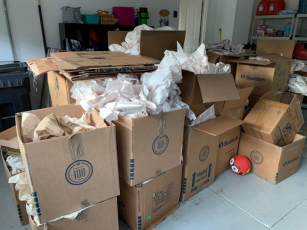
Look familiar? Just one batch of empty moving boxes and paper from our latest PCS move.  

With the support of our families, I moved back home during months-long deployments, which meant I didn’t have a lot of access to military-related resources at a base. While I may not have needed them at the time, looking back, I think about how different my life could have been. Our past few homes have had a large community military presence.

It was only this past fall that I became aware of an organization called Military No Stress PCS. A friend of mine saw they were looking for a military spouse to be the new program coordinator and she thought of me. After a lengthy conversation with MNSPCS founder Rob, I was the newest member of the Military No Stress PCS team. They were truly putting their money where their mouth was in terms of saying they support the military and actually supporting the military.

This program is presently in its infancy, but had it been something that existed when I was a new military spouse, it could have been a very valuable resource. We have PCS’d 8 times in 19 years and I could call myself an old hat when it comes to moving. If I had the opportunity to use this type of help when it comes to finding the answers I needed, you can bet I would use it.  

What is Military No Stress PCS?


Military No Stress PCS wants to help active-duty military families. 

• The idea of this program came from a civilian, in the real estate business in Florida, who met a military couple moving back to the States and were looking to purchase a house. During the real estate process, they became friends, and then, through this friendship, the civilian began to wonder about how he could help other military families. From this genuine desire to help military families, Military No Stress PCS was born.  

• At Military No Stress PCS, the commitment goes beyond the actual move and fosters a network of support and fellowship for our military community. Alongside active-duty members and spouses, we are supported by veterans and civilian volunteers,  representing all branches of our military family. It is all about giving back to the military community. 

• The Military No Stress PCS reach expanded to 87 CONUS locations and 12 OCONUS  locations in 2021. 

• Military No Stress PCS is funded by grants and donations and offers a personal concierge service completely free of charge. 

• Military No Stress PCS concierge service basics: they tell us what they’re looking for; whether that’s information on homes, neighborhoods, schools, commute times,  community involvement, local services, etc., and then we do the research and give them our highest recommendations.  

• Since beginning the concierge service last fall, Military No Stress PCS has had upwards of 75 inquiries on a variety of topics, such as housing, pediatricians, overseas orthodontists, school-aged care, and how to find local jobs.  

• Military No Stress PCS simply wants to support those who serve and their families by offering resources at no cost to them. For housing (rentals or buyers), we have real estate agents who are often military spouses themselves and/or are certified Military Relocation Professionals.  

• Military No Stress PCS also employs military spouses and retired military to ensure the recommendations are authentic and come from experienced professionals.  

• MNSPCS hopes to bring military families as many answers as possible for their PCS  questions (including questions they might have even after they’ve settled) and to reach beyond those resources to allow military families to find the same community aspects when moving from location to location, saving families the time and energy revisiting the search with each move. 

The information is out there in a thousand different locations. It can often be found by knowing the right places to search and the right keywords to type in. Sometimes, though, I am just plain tired of searching and that’s where Military No Stress PCS would come in.

There will be stress (that is a given) and there will be things that simply have to play out before the stress will be gone or even be merely reduced. These are just facts about military life. I have often found military spouses (myself included!) to be stubborn and strong and accepting help is not usually in our nature. After I had my twin boys, however, I realized how much help I needed and that some people genuinely want to help and the mission behind Military No Stress PCS is exactly that.  

This military life has brought my family so many opportunities, including a tour overseas. Let MNSPCS help reduce your PCS stress so you can enjoy your opportunities.

Filed Under: Guest Post, PCSing

Becoming Financially Ready When Your Spouse Leaves the Military

February 15, 2022 by Guest Writer Leave a Comment

Becoming Financially Ready When Your Spouse Leaves the Military

No one stays in the military forever. That can be an exciting, but also scary thought, especially if you have spent your adult life in military service, or married to a military member. Transitioning to an after military life is a big change, logistically, emotionally, and financially. Preparing for those challenges can make it easier – but how do you prepare for so much at the same time?

The first step is to recognize that it is a big change. Many military families are so excited for the next chapter of their life that they sometimes forget that there are a million little steps along the process. Communication and organization are key.

Spouses need to talk to each other. A lot. Figure out a way to gather the details of your transition, whether that is a notebook or a spreadsheet, or a checklist. (I have a retirement checklist, and it can be used for ETSing, too.) Take some time regularly to review your list together, and discuss how things are unfolding.

The next step is to identify the big changes that will happen in your unique transition. For some, the biggest parts are moving their family and kids starting a new school. If you’re not moving, the biggest changes for you might be a new job and/or going back to school. Consider the logistical, emotional, and financial aspects of each item.

Now, start to make a list of the things you need to do. Here are some ideas to get you started:

LogisticalEmotionalFinancial
Finding a new jobWriting a resume
Buying interview clothes
Practicing skills
Traveling for interviews
The process can be discouragingLack of income
Cost of interviewing (clothes, travel)
Delay for first paycheck
Moving houseFinding new home
Preparing to move
Balancing loss and excitementSetting up new home
Down payment/security deposit
Starting a new educational programWhat course to takeYou may feel both excitement and anxietyTuition and fees
Childcare
Lost income
Changing your state of legal residencePaperwork
Vehicle inspections
Rewriting wills
Hopefully none, but some people do feel a loss at leaving their “home” stateRegistering vehicles
New drivers licenses
Kids changing schoolsGet transfer packets
Find immunization records
Gather proof of residence
Help kids with sadness, anxiety, and trepidationNew uniforms
Sports team fees


Your list will be different, and probably a lot longer. But you don’t have to do it alone, and you don’t have to do it all at one time.

Start as early as possible in the transition process. Most of us know that we’ll be leaving military life a few years in advance, even if we don’t have an exact date. Take one step at a time, chipping away at your to-do list.

Bring in help whenever possible. Help might be:

  • Your best friend to help you weed through closets and drawers.
  • A family therapist to work through the emotions that come with life changes. (Your installation probably has a Military and Family Life Counselor, or Tricare has very good mental health coverage.)
  • The on-base personal financial educator to help you create a post-military budget.
  • A babysitter to give you time to do things.
  • One of the many military and civilian programs to help veterans create a resume.
  • A home stager to get your house ready to sell

Lastly, I can not emphasize enough: Make sure the service member attends the Transition Assistance Program classes. Twice if possible. If you’re the spouse, try hard to attend also! 97% of the frustrations I hear during transition are things that are covered in TAP. COVID space restrictions have made it hard for spouses to attend in many locations, but the situation seems to be improving. If you can’t get into a physical class, utilize the online version.

Most of all, give everyone some grace in this truly once-in-a-lifetime situation. While you are working through all of this, your spouse is processing their own set of concerns and challenges. Kids may be feeling the pressure, too. If things are tense, step away and let them cool down before tackling the issue in a productive way. Practice self-care, and encourage your loved ones to take care of themselves, too.

For most people, leaving the military is a big project. Just like any other big project, it will go a lot more smoothly if you plan carefully, work with your teammates (aka your spouse and kids), and bring in help when necessary. Then you can get started on your next big adventure!

Kate Horrell is an Accredited Financial Counselor® and personal financial educator who helps the military community make the most of their pay and benefits. She shares the most up-to-date information in understandable terms, and highlights how rules, programs, and laws will directly impact your personal finances. With over 10 years working with thousands of military families, she understands the concerns of currently serving, retired, and veteran families. You can find her at KateHorrell.com.

Want to write a guest post for Soldier’s Wife, Crazy Life? Please email me at Julie@soldierswifecrazylife.com and let me know! I take pieces on anything milspouse related, from deployment tips to duty station reviews.

Filed Under: Money Tagged With: military life, money, veteran

Parenting Your Teens Through a Deployment

November 17, 2021 by Guest Writer Leave a Comment

Happy to have this guest post by Becca! Want to write a guest post for Soldier’s Wife, Crazy Life? Please email me at Julie@soldierswifecrazylife.com and let me know! I take pieces on anything milspouse related, from deployment tips to duty station reviews.

Parenting Your Teens Through a Deployment

Being a military spouse is a hard job. Being a parent of teens is even harder. When deployments come, and you’re left to parent teenagers on your own, it can feel like going into battle with only a popsicle stick as a weapon. Teenagers aren’t as scary as they sound, as long as you know what to do when the going gets rough. Deployments represent an extraordinary chance to connect with your teens and strengthen your bond.

A Note About Teenagers

We were warned about the teenage years. Everyone told us they would be terrible – that our kids would run amok, be defiant, and skip school. While those things do sometimes happen, I’m here to tell you that, by and large, teenagers are awesome. 

In their teen years, our kids grow into themselves. We get to see glimpses of the adults they will become. It’s a wonderful time for meaningful conversations about life, the world, and your child’s place in it. And let’s not forget that teenagers are self-sufficient: they sleep until noon if you let them, do their own laundry, and once they get a driver’s license, you can have them stop at the grocery store on the way home from school. 

Of course, it’s not all sunshine and roses. Teens face very real, very scary problems: societal pressures, mental health challenges, bullying, drugs, alcohol, sex. I’d take potty training and tantrums any day over having to navigate some of the issues my teens have faced.

Being a Teenager in a Military Family

Military kids aren’t immune from typical teenage problems. In fact, they face even greater challenges because they are military kids: constantly moving from one school to the next, saying goodbye to friends at a pivotal time in their lives, and living without one or both parents for months on end. During a deployment, those typical teenage problems seem even more significant to our kids. 

As the parent left behind, we often take on the brunt of their pain, anger, and sadness. Guiding teenagers through a parent’s deployment can feel like a monumental task, but it is not impossible. With enough careful planning, love, and outside support, you can help your teens cope during a deployment. 

Take Care of Yourself First

We hear it all the time as military spouses: you have to take care of yourself first. “You can’t pour from an empty cup,” they tell us. “You have to put your oxygen mask on before helping others.” All cheesy cliches aside, self-care is vital, especially during emotionally exhausting times of life. Teenagers can be super wonderful most of the time, but they are also challenging at others.

Your energy isn’t infinite. To have enough energy to support your teens when they struggle, you have to recharge first. Start by carving out some time for yourself. 

Keep Them Talking

Teenagers might act like they don’t need us (and they might even believe they don’t). However, in these formative years, parental guidance is crucial. When one parent is deployed, half of our kids’ parenting support system is gone for months at a time. 

Be intentional about creating and maintaining open communication. Getting a teen to open up about thoughts and feelings isn’t always easy, but the tips in this link can help you start a dialogue. Let them know that you are a safe space, that your teen can tell you anything, without judgment – and mean it. 

Secondly, before a deployment, have your spouse create a communication plan with your teen. Maybe it’s an online game that your teen and your spouse can play together across the miles. Perhaps it’s a weekly phone call solely between your spouse and your teens. Encourage your kids to keep a journal of things they want to tell their deployed parent. Then, during that scheduled call, they’ll have lots to talk about.

Encourage External Support

Teens value the opinions of their peers. Often, they’ll listen to their peers long before they listen to adults. The trick is to guide your teens toward healthy, positive friendships that strengthen their mental and emotional health.

Military kids face specific challenges that only other military kids can truly understand. If your child doesn’t have any military-associated friends, encourage them to seek out groups of military peers. Connecting with other military kids can help your teen feel less alone. 

If your child struggles to find others who understand, suggest the following:

  • School groups with like-minded people. Many military communities have after-school programs that connect military kids.
  • Contact the School Liaison Officer on your campus. This person can help direct your child towards support programs for teens with deployed parents. 
  • Online groups, such as Military Kids Connect. Many teens feel more comfortable opening up online than they do in person. Of course, be sure to monitor these online groups and ensure everyone stays safe.

If your child is genuinely struggling with mental or emotional health, contact your medical professional. You might also reach out to on-post mental health services, such as the completely free Military and Family Life Counseling (MFLC) representative on your installation. Some locations have MFLCs that work specifically with children and teens. Many therapists off-post also take Tricare insurance, giving your child access to a great network of mental health professionals at no cost. 

Stay Busy

During a deployment, days can often feel twice as long. Staying busy helps the time pass quickly, and it helps keep you and your teens connected. Sit down together and brainstorm ideas for a “deployment bucket list.” Include places to go, things to do, and unique experiences to do together while your spouse is deployed. Then, choose at least one item from that list to complete each week.

You can also encourage your teens to stay busy with after-school activities, sports, time with friends, and pursuing new hobbies. Fill your days – and theirs – with mental stimulation and physical activity. Staying busy not only helps the deployment go by faster, but it also gives you and your teen an outlet to release your emotional and mental stress.

Lower Your Expectations

We sometimes forget that our teenagers aren’t mini-adults. They’re still kids. And they’re kids dealing with very real emotions about their deployed parent. Cut your kids some slack during deployment and lower your expectations. Mental health is always more important than an “A” on the science test.

Even in the best of circumstances, parenting teens can be tough. Adding a deployment to the equation sometimes makes it feel impossible. Take it one day at a time. Take care of yourself. And love your kids hard. Eventually, that deployment countdown will hit zero, and you’ll be a stronger family because you faced this hardship together.  

Becca Stewart is an Air Force Spouse, mother of two, freelance writer, and sufferer of Wanderlust. Originally from Colorado, she enjoys anything outdoors, especially if there’s snow involved. She is a travel fanatic, always looking for her next great adventure. As a full-time writer, Becca works closely with several nonprofit organizations and is a passionate advocate for human rights and military families. She is Mom to two incredible kids, one teen, and one young adult. Together, they’ve been through four deployments and countless TDYs.  Learn more at writebecca.com.  Website Facebook LinkedIn

Filed Under: Military Children, Guest Post Tagged With: guest post, military children, military life

A Fight Against Sexual Assault On Military Children 

October 25, 2021 by Guest Writer Leave a Comment

A Fight Against Sexual Assault On Military Children 

By: Jusika Martinez | Website | Twitter | Facebook

Many great leaders say, “leave a community better than you found it’. But what does that really mean? Does it mean unchanged big ways? I’ve learned over my journey as a military spouse that unless you make big waves, changes don’t actually happen; this is across all of the branches and within all of our communities. 

This article to you as a fellow spouse is me making an intentional wave. In hopes of making sure our communities are a little more educated and a little more aware. Aware and educated about what? Well, that some military families face crises inside our community sometimes due to other military members or their families’ actions. 

Before I tell you about how I became educated in all of the rules, regulations, and oversight, I want to take you back to 2018. I was the volunteer President for our Enlisted Spouses Club. I was intertwined with many of the First Sergeants at the Air Force base we were stationed at. I helped these First Sergeants operate moments of kindness for their squadrons and prepare for seven separate memorial receptions for the 7 Airman we lost in 10 months.

My favorite part of it all was that I helped them connect to spouses within their squadron and around the base. I was also a Master Resilience Trainer creating the spouse initiative at our base. I worked remotely as a Digital Marketing Manager and freelanced for local churches in our community. 

During 2018 I became weary of the isolation that remote life can create; I felt like I never left my house… just zoom call after zoom call. In August of 2018, I decided that I would find a job outside of my remote position. This meant that our then 2-year-old daughter would need full-time daycare.

Due to my daughter’s age, I had been able to balance working, volunteering with part-time care, and my active duty spouse’s help. I knew that finding a job would take some time because that local area was not keen on hiring military spouses due to the length of time spouses typically were stationed there with their active-duty members. Thankfully by November, I found a position as a graphic designer at a cause marketing agency. I was excited to be there and to start this chapter. 

To follow the rules and the regulations of our military installation where I lived, I enrolled our child in a Family Childcare Home; commonly known as an FCC Home. It wasn’t the Family Childcare Home that I wanted, but the other person’s license and background check were delayed for some reason, but since it was regulated by the Air Force I thought that I could trust for care, even if it wasn’t the one I preferred.

In mid-December, while at work getting ready to pitch a marketing campaign, I received photographs taken by a third party through the FCC provider’s Facebook messenger. When I saw these photos, my stomach sank. My child was re-dressed in brand new clothing that I was unaware of, hair was redone, and she was posing with the FCC provider in her pajamas.

I took a deep breath, and I texted my spouse and showed him what I got, and he said: “no, that feeling and concern is right.” We then removed our daughter from this FCC provider and kept our daughter home to monitor her. After two weeks of watching and trying to decipher all of the signs of dysregulation, screaming, violence, needing significant reassurance, and inappropriate sexual behavior meant. We called our civilian pediatrician, who then recommended taking her to the local emergency room. 

Once upon arriving at the E.R., the nurses listened, and then the local sexual assault victims advocate and police came. I repeated our concerns and where they stemmed from, the things we’re seeing, and then a medical examination happened. A few hours after arrival, we left with discharge paperwork, victim resources, and a police report number.

Since it was late, I did not read the paperwork. I just carried my kid in my arms out to my car out past the women’s ward where we brought her into the world almost three years prior. Wondering what the purpose of this visit was because it didn’t really seem to do anything except to give me the paperwork.

Why did I tell them my concerns? Why did I let them into the nightmare we had been watching and living in just to get some paperwork? Where was the immediate help in stopping the games that she was playing or the things she was doing to herself? The next day, I stopped and read the papers we were given — sexual assault by bodily force by caregiver.  

Those words changed everything.  

Had I known what we were going to walk through the next 24 months, I would have said “no way.” I then googled signs of sexual assault on young children. Check, check, check, check, check — how did I brush some of these off as fixable or adjustment? And wait, this doesn’t happen in our military community. Not only did our case get reported to the local police, but it was also shared with the military investigative agency because of the interagency agreement. 

This is where I have to pause with just sharing what we lived because we went through a lot after our young daughter’s case was reported and it was a lot for any family to endure while dealing with such trauma. From harassment to intimidation to downright not being believed. And I was desperate to get help for our daughter and her experience.

After I was laid off a few weeks later for not being able to be at work due to trying to find our child services, I took to social media, and I received a call on my personal cell phone from the then Command Chief citing my social media post was “unsubstantiated.” Which made zero sense because we had the medical evidence and my child’s inappropriate sexual actions and the traumatic games she would play. Once I laid everything out, I was told I would get a call back. One week later, this Command Chief retired, and I never heard from Senior Leadership again. 

This is where I now have to make a wave and educate you on some of the rules and regulations that I have uncovered in the last 24 months through an Inspector General complaint and multiple conversations with those above that installation leadership. Some of these educational moments were brought to us by our daughter’s Special Victim’s Council, and some were discovered after talking to other command chiefs after we left the base we were stationed at. 

Throughout all of this, the word unsubstantiated stuck with me. How could we have the medical paperwork that we did, and it be unsubstantiated? 

At the time we were told that for the investigative agency to open a case, they needed three things… a victim’s statement, photographs or video of it happening, and a medical examination. Since we did not know better at that time or have these three things, a case was not opened, which meant no one was investigated or charged. At that time we were just left to pick up the pieces of our child and our lives that had shattered because of what happened and the issues she was continuing to experience. 

After some investigation, we found out the following items: 

  1. The victim’s statement was not taken due to our child’s age which at the time was 3 years old. The investigative agency declined to interview her because of her age. We were told that the military investigative agency does not interview children under the age of 3, and in our case, their notes show that they did not contact a headquarters subject matter expert on conducting an interview on children. 
  2. The photographs or video that the investigative agency told us they needed to open a case was false information. 
  3. The investigative agency and special agents were not educated on how to handle child sex crimes and the notes that were taken do not describe the actual items that our child was going through. 
  4. The medical examination was not believed by the investigative agency and since the local police went off the investigation that the military investigative agency did the local police found no reason to pursue an investigation due to lack of being a violent crime. 
  5. The investigative agency acted out of standard operating procedures by discussing our case with military family agencies that were not involved nor would ever be involved in handling our child’s case which lead to disinvites for speaking requests from those family agencies for me.
  6. The investigative agency acted out of standard operating procedure when they told the Family Advocacy Program to stand down. 

We have since asked that a curriculum on child sex crimes be built for the military investigative agency so that when they handle such crimes, they are equipped to handle them. 

We also learned that our child’s case was not entered into the Family Advocacy System of Record and it was not reviewed by the Clinical Case Staff Meeting meaning a Central Registry Board (CRB) was not opened. And separately a Family Child Care Panel was not held regarding the sexual assault, only the unconsented photographs. 

So, let’s take a moment to break this down. Since the Family Advocacy Program did not look into a maltreatment case reported to them it was not entered into a system called the Family Advocacy System of Record meaning that the next step of a Clinical Case Staff Meeting did not happen which means a CRB did not hear the case.

What does a CRB do and who sits on the CRB? The CRB is chaired by the vice wing commander, and membership includes the staff judge advocate, security forces, Office of Special Investigations, Family Advocacy officer, command chief master sergeant, and the member’s unit commander. The CRB hears cases of physical, emotional, and sexual abuse and neglect. There are strict guidelines and criteria for determining whether or not an allegation meets the Air Force definition for maltreatment. Once information on the case is presented, a show-of-hands vote determines whether or not a non-accidental act was committed, and if so, whether or not there was a significant impact from the act. The findings are entered into a DoD Central Registry database maintained by Brooks City-Base. 

The support of the Family Advocacy Program would have meant that the case would have been heard and our daughter and we would have had the tools to handle the emotional and mental health issues our daughter was experiencing. The opening and hearing of a CRB would have potentially stopped this FCC provider from opening at another base, and it would have unlocked additional base resources for us as parents.

But it didn’t happen, because we were not believed. We eventually collected ourselves enough and got our child into therapy at the local advocacy facility that helps treat children and their families who have experienced childhood sexual abuse through a state-funded victims grant. The interview to get her into therapy itself was a feat; we had to sit through a nearly two-hour interview explaining our family makeup and all that had happened. We basically had to relive what had become our worst nightmare. 

In our journey, we also learned that the Family Childcare Homes are licensed by the military branch they work under, not the local state. What does that mean for us as customers of the FCC homes? Well, when the state oversees daycares, they publicly publish the issues found upon inspections. With the FCC homes, those inspections just sit in a file in a desk on the military installation. As a parent, you will never know the issues this provider has had or were found upon inspection.

In all of this, we also realized that there isn’t a safe way to report sexual assaults on young children. 

In adult cases of sexual assault in the military, there is Restricted Report and Unrestricted. For children, there is not that. There is no organization or form to start a report. 

So as you can imagine you or your child’s privacy isn’t protected and in our case, it led to an extreme mishandling of our daughter’s case. For us, those who were interviewed by the military investigative agency were sharing that we came forward with a false report of sexual assault, and many in positions of authority were sharing our child’s private information about her sexual assault to their personal friends. Many did not and do not understand that no evidence is different than not enough evidence to proceed. Her Special Victims’ Counsel attempted to get this to stop and there be an understanding of this, but the leadership of the people doing it became complacent and continued to allow it to happen, leaving us unprotected. 

Earlier I mentioned our Special Victims Counsel — What is a Special Victim’s Counsel? It is a program developed by the military that is a military attorney who specializes in representing victims of sexual assault, sexual misconduct, stalking, and other similar crimes. Not anyone can get an SVC. You have to go through an application system, and you are not always granted one, but our daughter was. The SVC helped us as the parents of a minor understand the rules and regulations and what we could or couldn’t do. 

They helped my spouse request a humanitarian assignment because, at that time, Active Duty members could not get expedited transfers if their dependent was sexually assaulted. The request in itself was another lesson that we had to learn. 

Due to our daughter’s medical needs, they turned the humanitarian assignment into an EFMP assignment. 

We’ve heard of the medical EFMP issues, right? We had no idea how bad it was until we experienced it after all of the trauma that we went through. The local EFMP allowed us to PCS to another base with two possible therapists for her.

When we got there, we found out that one of the therapists they recommended saw sexual offenders, and the other didn’t exist. We ended up going through and calling 150 therapists in the “surrounding” area to find zero services. And after 5 months of searching, we ended up driving 150 miles weekly for therapy for her.

Thankfully, after ten months of a heated exchange with the local EFMP, they were able to reassign us to another base thanks to the AF & EFMP HQ because there were zero therapy services within the local area and none out of the network that Tricare could enroll. 

Having this type of crisis and trauma and additional EFMP issues was a difficult season of life — it’s not one that we’ve entirely made it out of, but we’re now in a spot where we can find a sliver of clarity to understand what our child and our family has lived these last 24 months. That sliver of clarity is helping us inform you of what we’ve lived through and what the current rules and regulations are.

I know that some will say in the comments, “make a congressional complaint or “go to the Inspector General,” they will fix it. Well, we have. Our congressmen told us they couldn’t investigate this, so to use the Inspector General. At the end of May of 2019, we submitted a 13-page complaint. This complaint was later broken into two cases — one at the local level and one through the military investigative agency.

For the local level one, we waited 19 months for it to conclude; to only be told the provider took unconsented photographs and everything else was done “right”. For the military investigative agency case, we were basically told: “our hands are tied, and everything was done right.” Until I got a call after requesting the FOIA. Then we’re then told that the case notes did not match what was happening in many ways the investigative agency acted outside of the “standard operating procedures.” 

Some will say, “go to a military non-profit that advocates and lobbies for change.” I have, but our situation doesn’t align with their ‘military family issues” or was viewed as “just a west coast issue, not one that is really “rampant” in our military.” 

A fraction of these issues we have lived through are in the 2021 NDAA in section 549B, I know, but it isn’t enough. Because It primarily covers the tracking of these cases. “Tracking it” will only be for the families they (local leadership/FAP/the military investigative agency) deem it for. Like in our case, we had medical evidence, but the military investigative agency said they didn’t have the “items needed” to consider a case to investigate and the Family Advocacy Program stood down. 

And to be honest, the tracking isn’t enough. There needs to be justice and resources for families before we fix the unemployment and underemployment issues because if our kids aren’t safe, then our careers won’t matter.  

As of right now, the military investigative agencies should not be handling child sex crimes. Because not all are not educated or trained in it. Child victims and their families need to be listened to and treated without bias.

There also needs to be a vast understanding of trauma and childhood mental health needs of child victims and what type of medical needs they will have after such trauma. The families should never be blamed or accused of “making the Doctor check the sexual assault box.”

Additionally, there needs to be more regulations on these in-home FCC daycares. Right now, with how the military investigative agencies rules are written with needing video or photographs to open an investigation and these homes not being required to have video, then the military itself is establishing a very viable breeding ground for these cases. They are not offering even a sliver of possible justice, especially when we do not have parents who have been educated on the signs of sexual abuse and assault. 

The bottom line though is if families aren’t believed, then tracking doesn’t matter, especially if there is no consequence for the offender or support that fully understands what trauma does to a child and what the family goes through in these types of painful crises. 

If military leadership and others empathized, lived, or tried to understand the pain that comes with a traumatized child that cannot verbalize their trauma, they would never begin to think that a family would choose this road that comes after such a tragic crisis.

 
Which is why I have founded Operation Addi to help push forward policy and program asks for military children who are victims of sexual assault or abuse. Because our children’s safety and healing matters. You can view the current policy and program asks here.

Filed Under: Military Children Tagged With: military children, Military Family, Military Family Advocacy, military life

The Anxiety of a Military Spouse When Deployment Comes to an End

October 19, 2021 by Guest Writer Leave a Comment

Happy to have this guest post by Megan! Want to write a guest post for Soldier’s Wife, Crazy Life? Please email me at Julie@soldierswifecrazylife.com and let me know! I take pieces on anything milspouse related, from deployment tips to duty station review.

The anxiety of a Military Spouse when deployment comes to an end

The Anxiety of a Military Spouse When Deployment Comes to an End

If you have ever experienced an anxiety attack you will know exactly what I’m talking about. If you’re a military spouse, you will get it even more. Anxiety has a crazy way of messing with your head and your emotions. Before you know it, the anxiety has taken over your entire being and leaves you emotionally and physically exhausted. 

I can remember when my husband first deployed; the anxiety was taking over every ounce of my being. I couldn’t think about anything else. I couldn’t sleep.

Every time I looked at my husband I wanted to cry or throw up. It was like I couldn’t breathe. I wanted to cling to him. I wanted him to cling to me.

I didn’t want him to go. I tried my very best to understand the mission first and it was his duty. But a selfish part of me wanted to throw myself on the floor kicking and screaming. 

I’ve said this before and I’ll say it again, the morning he left I didn’t shed one tear. The anxiety I had felt for months suddenly went away. I stood there until the buses drove off and waited.

I took a moment to myself standing in the empty parking lot in the cold. I waited for the tears to come. I waited for the anxiety panic attack to kick in. I was prepared for it. But it never did. I got in the car and talked to my dad all the way home and not once shed a tear. 

I was beginning to think something was wrong with me. I got home, drank coffee, and got the kids off to school. I just kept waiting to feel something. Then it hit me.

I walked into our bedroom and looked at our unmade bed and everything I was waiting to hit me did. I fell to the floor with my heart aching an unbearable pain. I couldn’t breathe and I couldn’t stand up.

I sat on the floor sobbing for what seemed like hours but, it was minutes. I reminded myself what I had promised my husband; no matter what I would keep going. So, I got up, wiped my tears, and slowly got dressed for work. I just kept telling myself “you promised him to live your life, to keep going, to take care of our family, and to never quit”. So, I didn’t. 

Now I won’t lie. There have been many times during this deployment that I have cried. Either out of anger, feeling defeated, being scared, being lonely, or just happy tears.

However, I will say for the most part I took all those emotions and shoved them deep down in the pit of my stomach, and refused to let them come up. Any time I started feeling in the feel goods I would stop myself. “Remember Megan, you promised him to keep going”. So, I kept going no matter what. 

Now we are so close to being done. I texted my husband today and told him it was almost unreal. I haven’t allowed myself to think about him coming home for so long. I haven’t let myself count days or think about months.

Now that we are here, all the emotions I had been shoving down are all crashing into me at once. I am scared. I’m excited. I am overwhelmed.

There are so many questions constantly going through my head. What if he doesn’t want me anymore? What if we have both changed so much, we no longer connect?

What will the sex be like? What are his expectations? What are mine? So many questions and no answers. It’s terrifying to think about.

Anytime I start to think about it I tear up and start to cry. I see the Facebook posts and want to cry. I open the boxes full of his clothes and start to cry.

I look around at my messy house and think about everything that needs to be done to prepare for him to come and that really makes me want to cry. My husband is somewhere on a plane coming home to our family and I just can’t wrap my head around it.

It’s been so long since I’ve seen him, touched him, and smelled him. To think about it my heart wants to explode. And the anxiety gets higher and higher.

I try to control it but with every day I can feel the anxiety growing more and more. When will it end? The day before I pick him up? The minute I see him? I don’t know.  

I guess this will be a 2-part post. Right now, I can only write about how I feel as the deployment is coming to an end. Just my thoughts and feelings right now. Once we get to welcome him home and settle into a new normal, I can write about if I was right or wrong.

I will have a better understanding of how all this works. I hope I get to write something wonderful and picture-perfect. I hope my anxiety will calm down long enough for me to enjoy planning him coming home. Until then, I will just write about what I know. So, I will leave this as; “to be continued” …………

My name is Megan Davis. I have a full-time paying job and volunteer jobs that I love. I currently work as a Personnel Supervisor at Westaff where I match people in my community looking for jobs with companies looking for workers. I volunteer as the Family Readiness Group Leader for the 2-108 CAV Squadron in Shreveport. I work with Military Spouse Advocacy Network (MSAN) mentoring other National Guard Spouses. Following these passions, I was recognized as the 2020-2021 Louisiana National Guard Spouse of the Year. I love helping people, specifically military spouses. One of my main goals is to make sure military spouses know they are not alone when trying to navigate through the military world. I want to help give them the courage to speak out and help build a support system for them so they can make it through all the crazy things the military life throws at us. I am also a student at the University of Louisiana at Monroe for my bachelor’s degree in risk management. Graduating from ULM has been my biggest goal for years and I am proud to say I am almost there.

Filed Under: Deployment, Guest Post Tagged With: Deployment, military life, surviving deployment

When They First Leave: Tips for Starting a Deployment

August 25, 2021 by Guest Writer Leave a Comment

Happy to have this guest post by Holly. Want to write a guest post for Soldier’s Wife, Crazy Life? Please email me at Julie@soldierswifecrazylife.com and let me know! I take pieces on anything milspouse related, from deployment tips to duty station review.

When They First Leave: Tips for Starting a Deployment

I find that the hardest part of my husband being gone is always right at the beginning and then at the end. I always feel “lost” for a few days, adjusting to our new normal without him, and then I feel so stressed at the end getting ready for him to come home and trying to make sure everything is just right. This post tackles my tips for those first few days away…

Make Time for You

I know what you’re thinking, “don’t worry, he’s gone, I have tons of time for myself”, but really, on the first night alone, take some time for yourself and enjoy it. I always pour a bubble bath, grab a good book, and watch a chick flick on Netflix.

I love stretching out in the bed and controlling the remote (which usually never happens). Also, think about using this time to better yourself. Eat healthy, make time for the gym, and read that new self-help book you’ve been too busy to open. Not only will this help you pass the time, but you’ll make some positive changes that you can continue once he returns.

Spend Time with Friends

After you’ve had enough “me time”, search out your besties and find something fun to do. Sometimes that’s going out for a girl’s night, hitting up a concert, or even just grilling on the deck. Spend some time with the girls and build up those relationships.

Struggling to make friends in a new place? Try visiting with moms at school, daycare, or sporting events. Visit with other ladies at the gym or search out new friends at work. This is a great time to hang out with new people and check in on those you haven’t been able to visit with for a while.

Make Special Time with Your Children

One of the small blessings of my husband being gone is how close my son and I are. We spend lots of time together, just the two of us, and we have a great relationship. We try and do fun activities together and make new memories, even when my husband can’t be there to enjoy them with us.

I’ve found myself getting braver as he gets older too. We go camping together, weekend trips, and we’ve even ventured on a few road trips, just the two of us.

Whether this is the first time he has left or the tenth, these three tips seem to help get us through whatever military life throws at us. I figure you can look at their absence as an awful burden or as an opportunity to gain insight into yourself and build relationships; the latter makes for a much happier you and therefore a much happier military family in the trips to come.

Holly Corcoran is a military wife of 10 years, mom to one adorable and resilient seven-year-old, and third-grade teacher living in the flyover states. She juggles home, parenting, and teaching, while also sometimes taking calls from Afghanistan. Connecting with other military spouses and friends is a constant reminder “we’re always under the same sky.”

Filed Under: Deployment, Guest Post Tagged With: Deployment, military spouse, surviving deployment

Going Through a Deployment With Children

July 22, 2021 by Guest Writer Leave a Comment

Happy to have this guest post by Holly on going through a deployment with children. Please email me at Julie@soldierswifecrazylife.com and let me know if you would like to write a guest post for Soldier’s Wife, Crazy Life too.

Going Through a Deployment With Children

The orders are cut and the news is official: your spouse is ready for another military deployment. As you’re trying to wrap your brain around the upcoming challenges, those tiny hands tug at your jeans needing another cup of juice. And then you remember, as much as a deployment is hard on you, you’ve got children to think about too.

What do you say? How do you tell them? How do you help them prepare and cope?

Decide on the Best Time

I’m not sure there’s any right answer here, but from my experience, the answer depends on the child’s age. When my son was toddler-aged, we usually didn’t tell him about upcoming deployments; he wouldn’t understand and with no concept of days, weeks, months, we would only be setting him up for anxiousness. Now that my son is 5, he knows that suitcases mean Daddy is leaving and he starts to ask questions.

Now that he’s older, we start talking to him only when my husband starts packing and there are visible changes around our house. We read our military deployment books and my husband schedules a day of fun activities with him before he leaves. 

Going Through a Deployment With Children

We love this book from Usborne Books!

Include Them

What started out as a cute Pinterest idea, turned into a lifesaver for us during deployments. We have a Deployment Wall in my office at home and my son loves to view where Daddy is on the map and talk about what time is it in “daddy’s time.” We have pins marked for home, and then all of the locations my husband has been sent.

We have a clock that marks the time change and then an erasable frame with his address, making it easy to find when we send care packages. My son also loves to send Daddy his artwork from school, so there’s a clipboard where we save it until the next package is sent. 

Going Through a Deployment With Children

Our “Deployment Wall”

Recognize their Feelings

It’s hard to juggle it all, for sure, but it’s important to remember that little people don’t always have the maturity to handle their concerned feelings the same way that we do. When my husband leaves, I’m always sure to let his teachers know that there’s a change at home and to update me with behavior changes. When he was younger, they often commented that he would be more whiny or anxious. 

Now, he usually wants to talk about Daddy and their latest conversations at school. Sometimes it’s hard to recognize their concerns in the pouting and whining, but that may be how they’re expressing their emotions about the deployment.  

With a little bit of patience and a whole lot of love, your family will survive and thrive through the challenges that come with military life. The blessing is that your children grow up knowing the true meaning of sacrifice, honor and patriotism because they see it in their parents every day.

Holly Corcoran is a military wife of 10 years, mom to one adorable and resilient seven-year-old, and third-grade teacher living in the flyover states. She juggles home, parenting, and teaching, while also sometimes taking calls from Afghanistan. Connecting with other military spouses and friends is a constant reminder “we’re always under the same sky.”

Filed Under: Military Children Tagged With: deployment with kids, military kids, surviving deployment

How to Encourage a Military Spouse

July 21, 2021 by Guest Writer Leave a Comment

This post contains affiliate links!

How to Encourage a Military Spouse

By Lizann Lightfoot, the Seasoned Spouse

Military spouses and loved ones face a variety of challenges during military life. Sometimes, military paperwork and protocols cause the headaches. Other times, it is the challenge of taking care of the house and kids alone while the service member is away. Whether you or brand new or a “seasoned spouse,” there are always a million ways the military can ruin your day. 

When you hear a military spouse complaining about one frustration or another, it may be tempting to tell them to “just deal with it” because “hey, that’s military life!” But phrases like that are not actually encouraging and don’t solve any problems. Instead, here are some ways to truly encourage a military spouse—even if you aren’t one yourself!

Empathize. Even if you can’t relate to a military spouse’s exact situation, there’s a good chance you have experienced similar feelings of frustration or anxiety. You don’t have to raise 3 kids on your own while your spouse is deployed across the world to understand that a parent in that situation is going to be stressed and need some extra support! As you listen to their story, try to find words to describe their feelings—exhausted, disappointed, etc. Think about moments when you experienced those same emotions, and then share what was helpful to you during those challenges. 

Validate their feelings. Often, people are confused or overwhelmed by military life challenges, and they aren’t even sure if their reactions are “normal” for a military spouse or significant other. It may be reassuring for them to hear that their experience is actually quite common. There isn’t just one “right way” to be a military spouse. Everyone handles stress and sudden changes differently. So whatever they are experiencing right now is totally normal. It doesn’t have to be the right or wrong way to feel, it’s just a human response. 

“You’re not alone.” Military life can be very isolating. Many spouses and significant others find themselves living far from family, in an unfamiliar town, with very few friends. Oh, and then their service member has to go train for a few weeks or months. It’s no surprise if they feel frustrated and overwhelmed! Military spouses love to connect with each other and find fellow milsos who are having similar experiences. Let them know you can relate to their current struggle. They aren’t the only person who has ever navigated a deployment or a PCS move. There can be comfort in realizing that thousands of military spouses and loved ones have faced similar challenges and figured out a way to handle them.

Don’t judge. We’ve all been in situations where people offered less than helpful advice. One example is someone saying we “knew what we were signing up for” when we became military spouses. Newsflash—that doesn’t actually make a difficult situation any better. When someone is struggling, don’t tell them to get over it or stop being weak. Meet them where they are, without judgement.

Offer practical suggestions. There usually isn’t a one-size-fits-all solution to a crisis. But there is probably a resource somewhere that may help. If you know about a national program, a military discount, or a non-profit organization that could be useful, then share it! If you have a simple strategy or routine that works for you when you are in a similar situation, then let a milspouse know your tips and tricks! And if the problem seems too big for either one of you to handle, don’t be afraid to recommend professionals like counselors, doctors, or chaplains. Sometimes, just using one new resource can make all the difference during a stressful situation like a deployment or PCS move. Your practical suggestion might make a huge difference in another milso’s life. 

Write an “Open When” letter. To share words of encouragement when they will be needed most, write a note for your milspouse friend to open during a specific occasion. I did this in my new book, “Open When: Letters of Encouragement for Military Spouses.” Each letter speaks to a specific challenge of military life. Some are small, like “Open When You’ve Missed a Phone Call,” but other letters speak to heart-wrenching moments, like “Open When You Have to Leave a Home You Love.” The book releases on September 21, 2021, from Elva Resa Publishing, but it is available for pre-order now online, wherever books are sold! 

In my book, I combined all of the above strategies to create a resource that is truly encouraging and helpful. Inside, every military spouse will find a letter that speaks to them. The book makes the perfect gift for someone dating a service member or new to military life. It is also a great way to celebrate a “seasoned spouse” with experiences and memories they can relate to, and a final section of letters all about the later years of military life. Whether you are a military spouse who needs an occasional friendly word, or you have a friend who could use some support, turn to the book, “Open When: Letters of Encouragement for Military Spouses.”

Filed Under: Military Life Tagged With: encourage military spouses, military spouse authors, Military spouse life

  • « Go to Previous Page
  • Page 1
  • Page 2
  • Page 3
  • Page 4
  • Page 5
  • Page 6
  • Interim pages omitted …
  • Page 8
  • Go to Next Page »

Primary Sidebar

Sign up for your FREE Guide to the First 30 Days of Deployment!


Thank you!

Check your email for confirmation! 

.

About Soldier’s Wife, Crazy Life


Welcome to Soldier’s Wife, Crazy Life! I am so glad you are here.

My name is Julie and I first became a military spouse in 2005 when my husband of 3 years re-joined the Army. Then, in 2014, he joined the National Guard. In January of 2024, he retired from the National Guard after 21 years of service.

During our time in the military, we got to spend 4 years in Germany as well as Tennessee where we now call home.

We have three boys and have been through four deployments together.

I hope that you can find support for your own deployments, PCS moves, or anything else military life brings you through my articles and social media posts.


Support Soldier’s Wife, Crazy Life!

Buy Me a Coffee

Archives

Copyright © 2026 Soldier's Wife, Crazy Life on the Foodie Pro Theme

We use cookies on our website to give you the most relevant experience by remembering your preferences and repeat visits. By clicking “Accept”, you consent to the use of ALL the cookies.
Cookie settingsACCEPT
Manage consent

Privacy Overview

This website uses cookies to improve your experience while you navigate through the website. Out of these, the cookies that are categorized as necessary are stored on your browser as they are essential for the working of basic functionalities of the website. We also use third-party cookies that help us analyze and understand how you use this website. These cookies will be stored in your browser only with your consent. You also have the option to opt-out of these cookies. But opting out of some of these cookies may affect your browsing experience.
Necessary
Always Enabled
Necessary cookies are absolutely essential for the website to function properly. These cookies ensure basic functionalities and security features of the website, anonymously.
CookieDurationDescription
cookielawinfo-checbox-analytics11 monthsThis cookie is set by GDPR Cookie Consent plugin. The cookie is used to store the user consent for the cookies in the category "Analytics".
cookielawinfo-checbox-functional11 monthsThe cookie is set by GDPR cookie consent to record the user consent for the cookies in the category "Functional".
cookielawinfo-checbox-others11 monthsThis cookie is set by GDPR Cookie Consent plugin. The cookie is used to store the user consent for the cookies in the category "Other.
cookielawinfo-checkbox-necessary11 monthsThis cookie is set by GDPR Cookie Consent plugin. The cookies is used to store the user consent for the cookies in the category "Necessary".
cookielawinfo-checkbox-performance11 monthsThis cookie is set by GDPR Cookie Consent plugin. The cookie is used to store the user consent for the cookies in the category "Performance".
viewed_cookie_policy11 monthsThe cookie is set by the GDPR Cookie Consent plugin and is used to store whether or not user has consented to the use of cookies. It does not store any personal data.
Functional
Functional cookies help to perform certain functionalities like sharing the content of the website on social media platforms, collect feedbacks, and other third-party features.
Performance
Performance cookies are used to understand and analyze the key performance indexes of the website which helps in delivering a better user experience for the visitors.
Analytics
Analytical cookies are used to understand how visitors interact with the website. These cookies help provide information on metrics the number of visitors, bounce rate, traffic source, etc.
Advertisement
Advertisement cookies are used to provide visitors with relevant ads and marketing campaigns. These cookies track visitors across websites and collect information to provide customized ads.
Others
Other uncategorized cookies are those that are being analyzed and have not been classified into a category as yet.
SAVE & ACCEPT